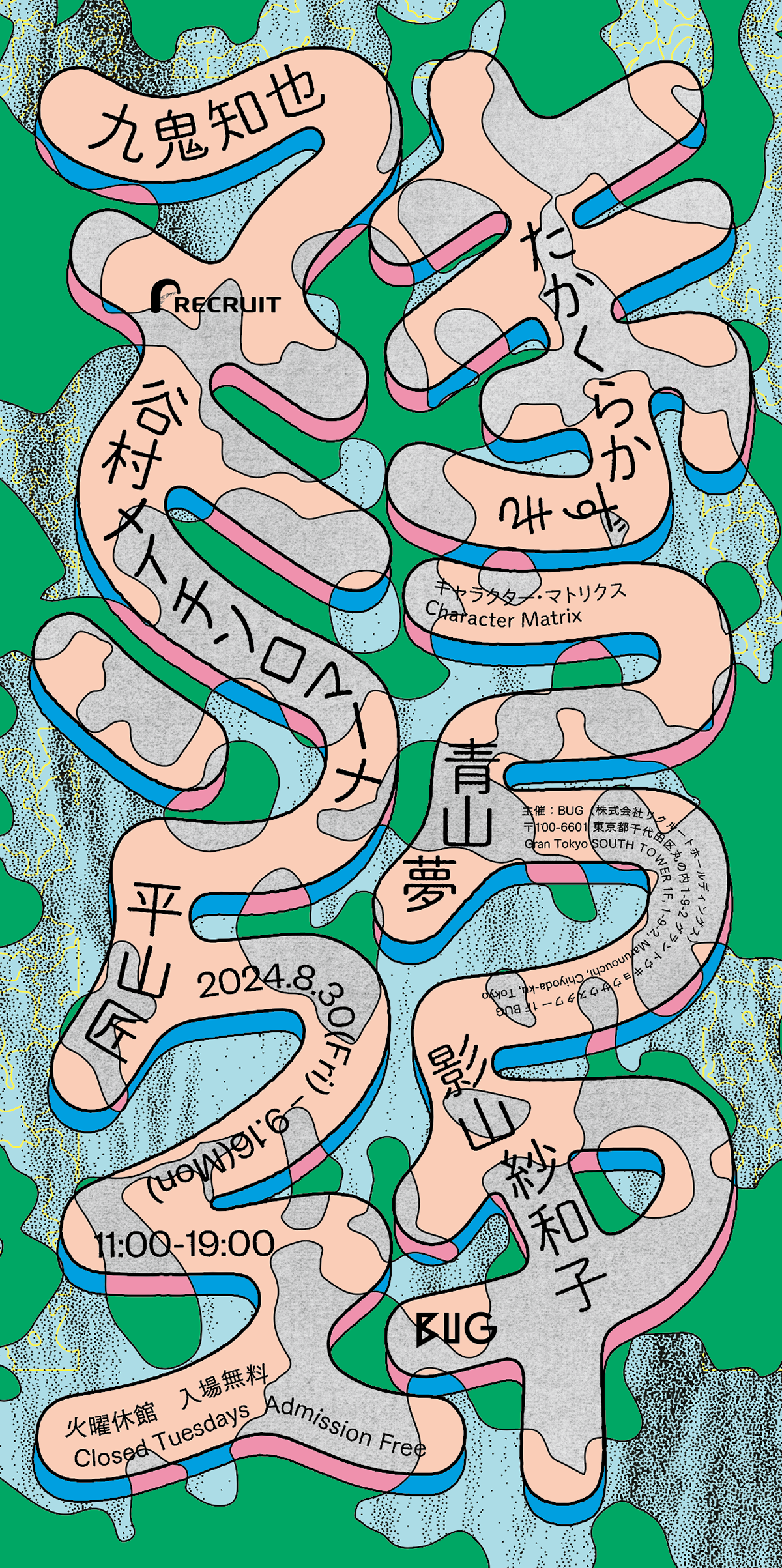
Artists : Yume Aoyama / Sawako Kageyama / Tomoya Kuki /
Takakurakazuki / Meichin Romana Tanimura / Takumi Hirayama
Curation : Takakurakazuki
Stage Design: Tomomi Nakamura
Documentation Photography / Installation: Yuji Oku
Graphic Design: Ryu Mieno
Production: Aya Nose(BUG)
YEAR : 2024
Organized by : Recruit BUG
Takakurakazuki / Meichin Romana Tanimura / Takumi Hirayama
Curation : Takakurakazuki
Stage Design: Tomomi Nakamura
Documentation Photography / Installation: Yuji Oku
Graphic Design: Ryu Mieno
Production: Aya Nose(BUG)
YEAR : 2024
Organized by : Recruit BUG
Character Matrix
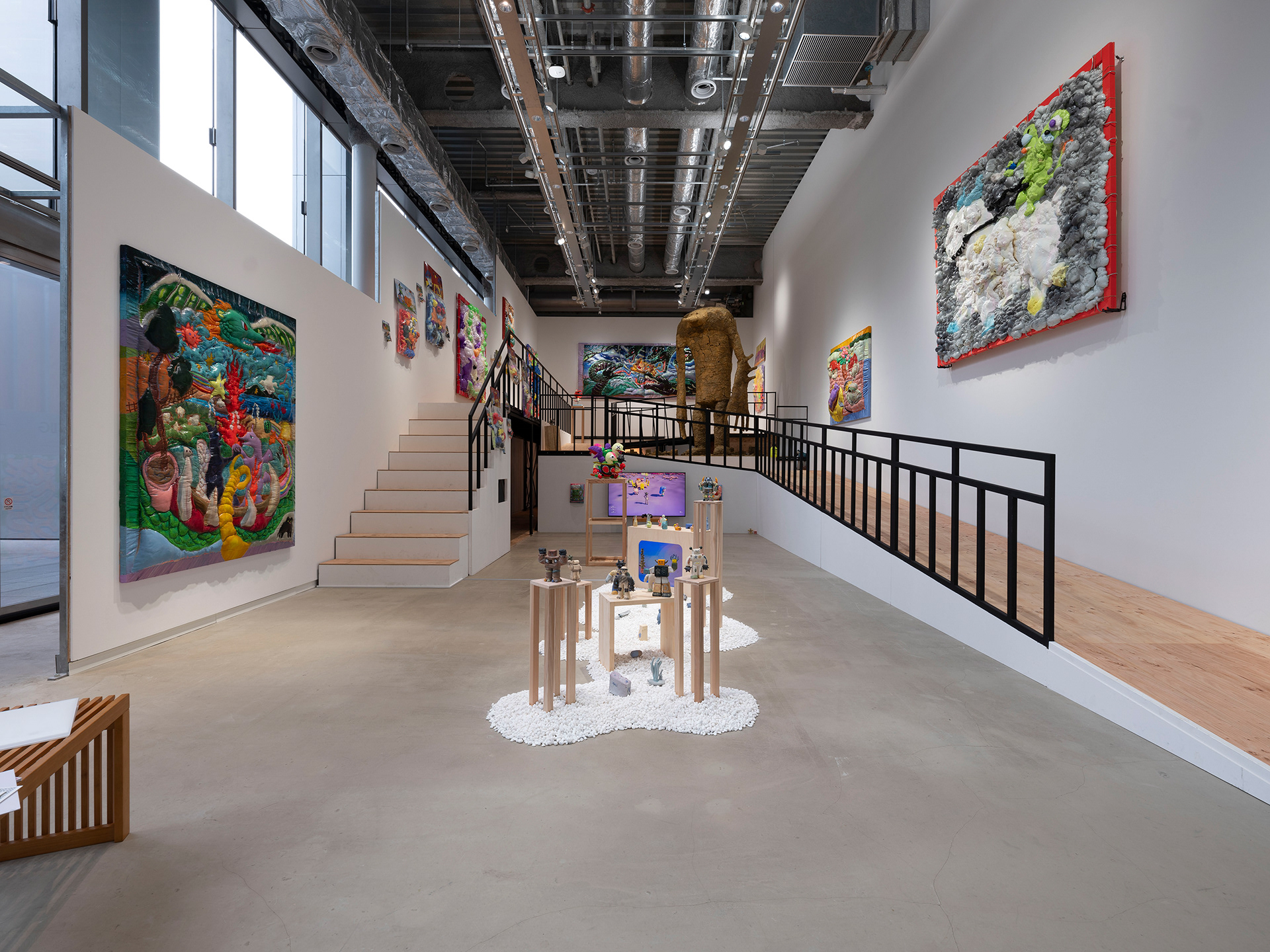
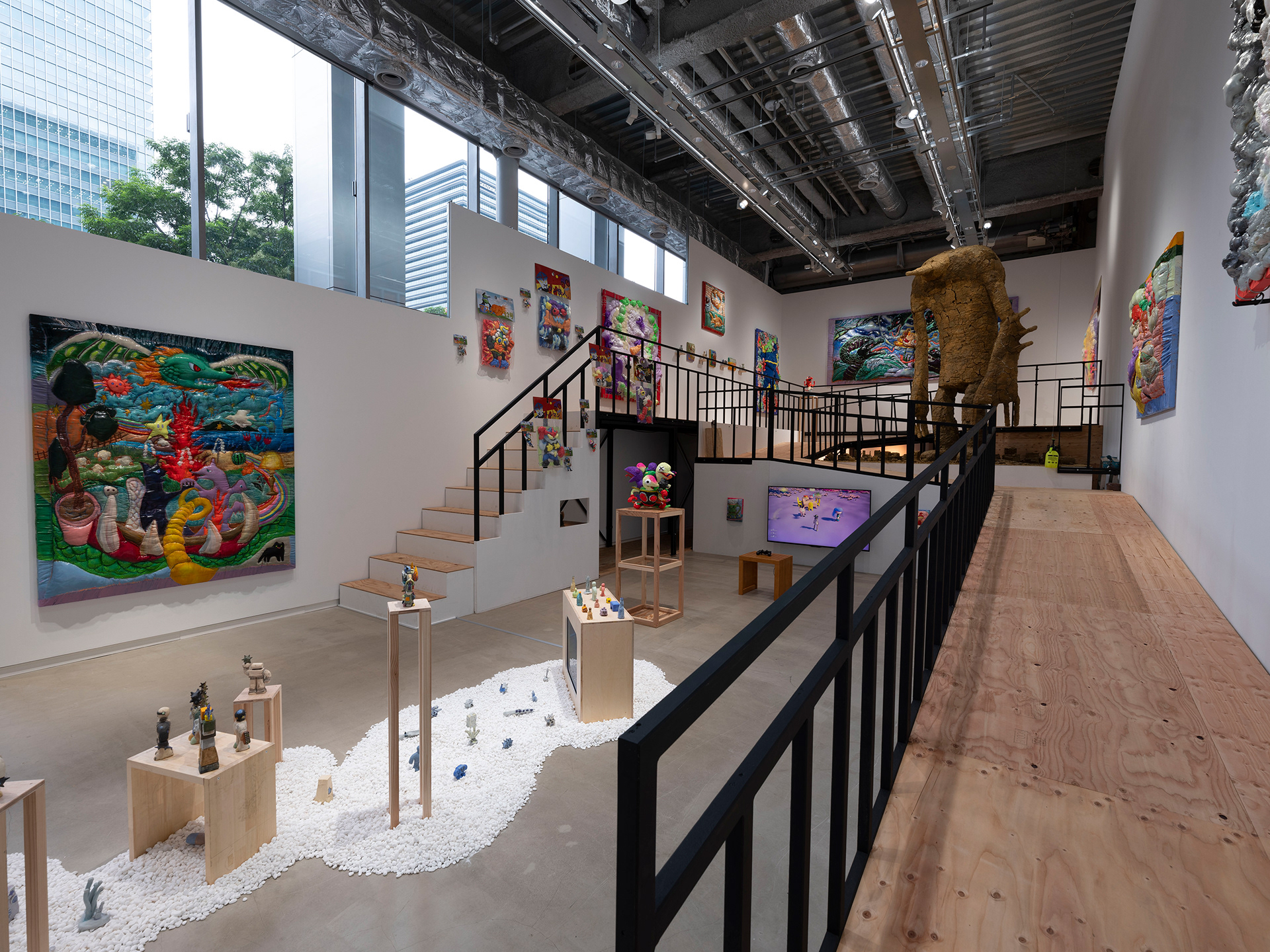
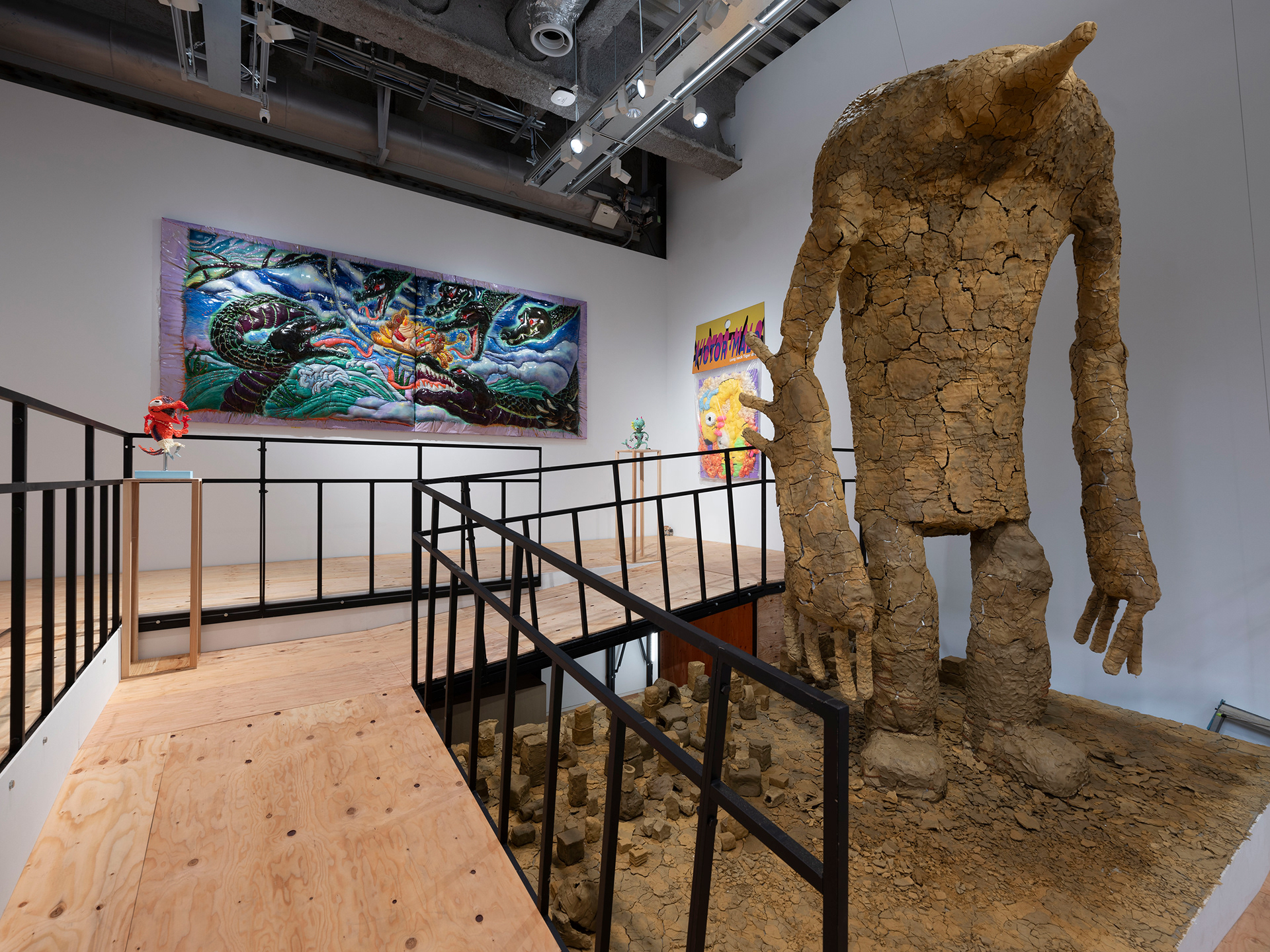
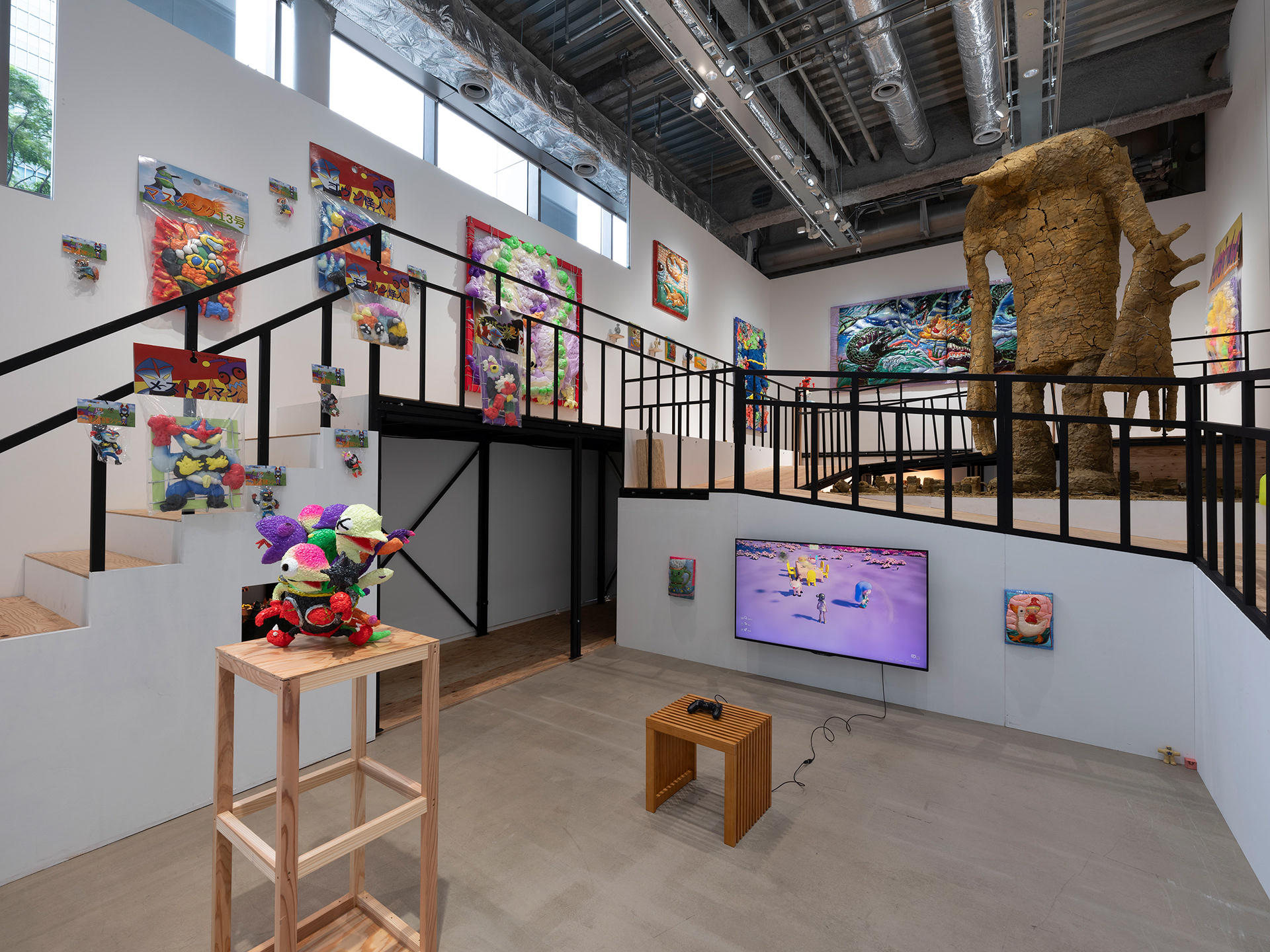
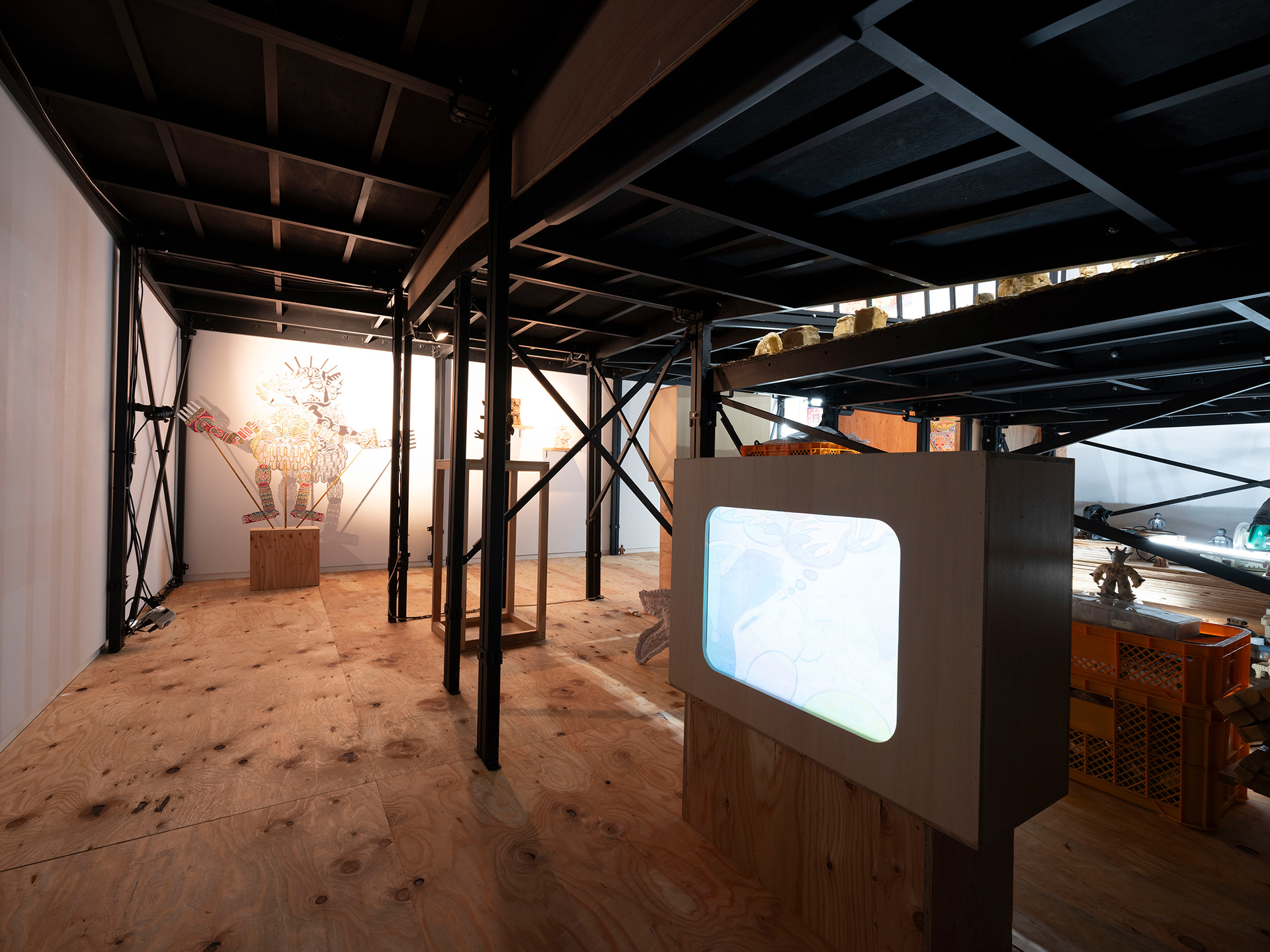
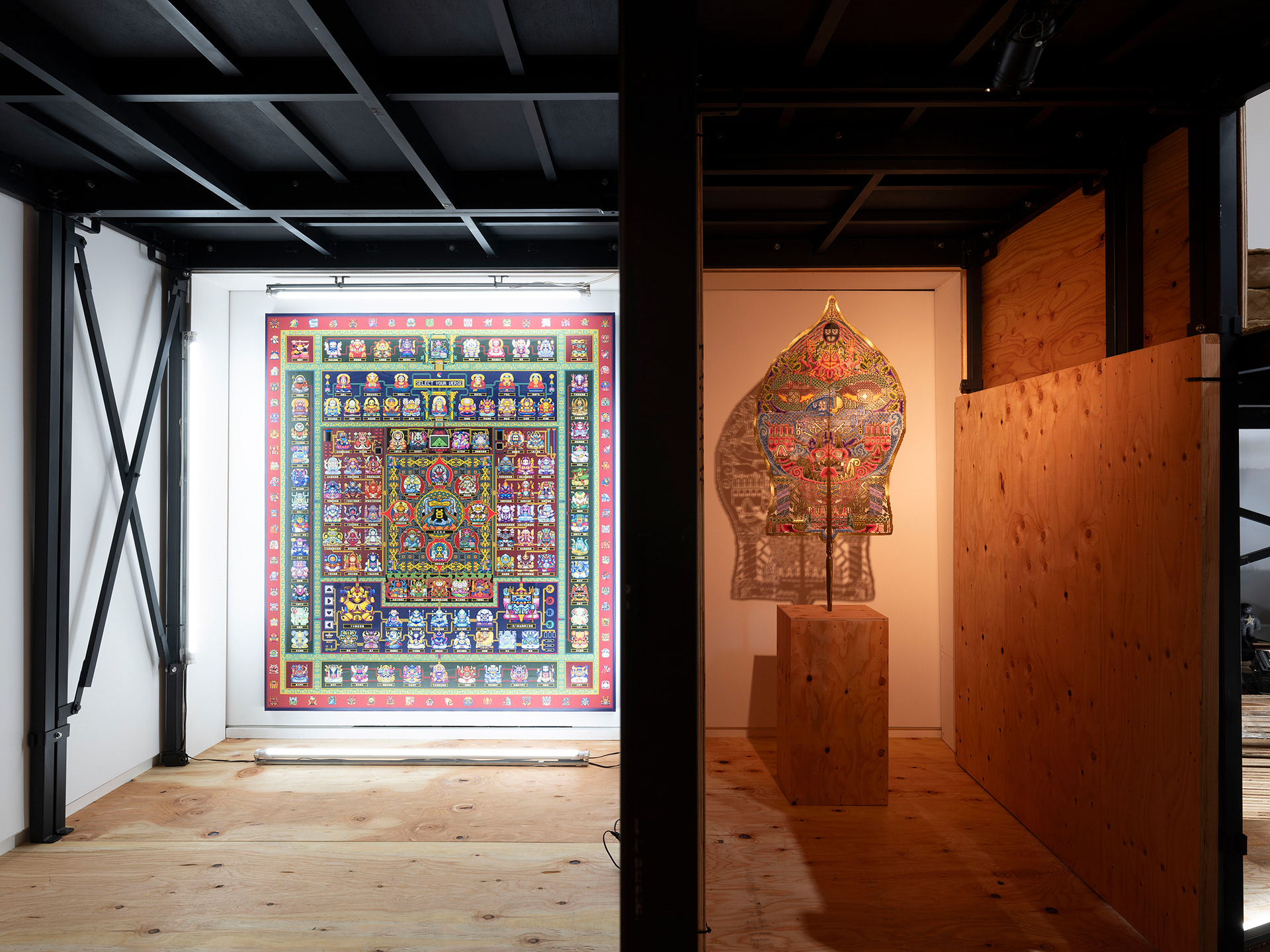
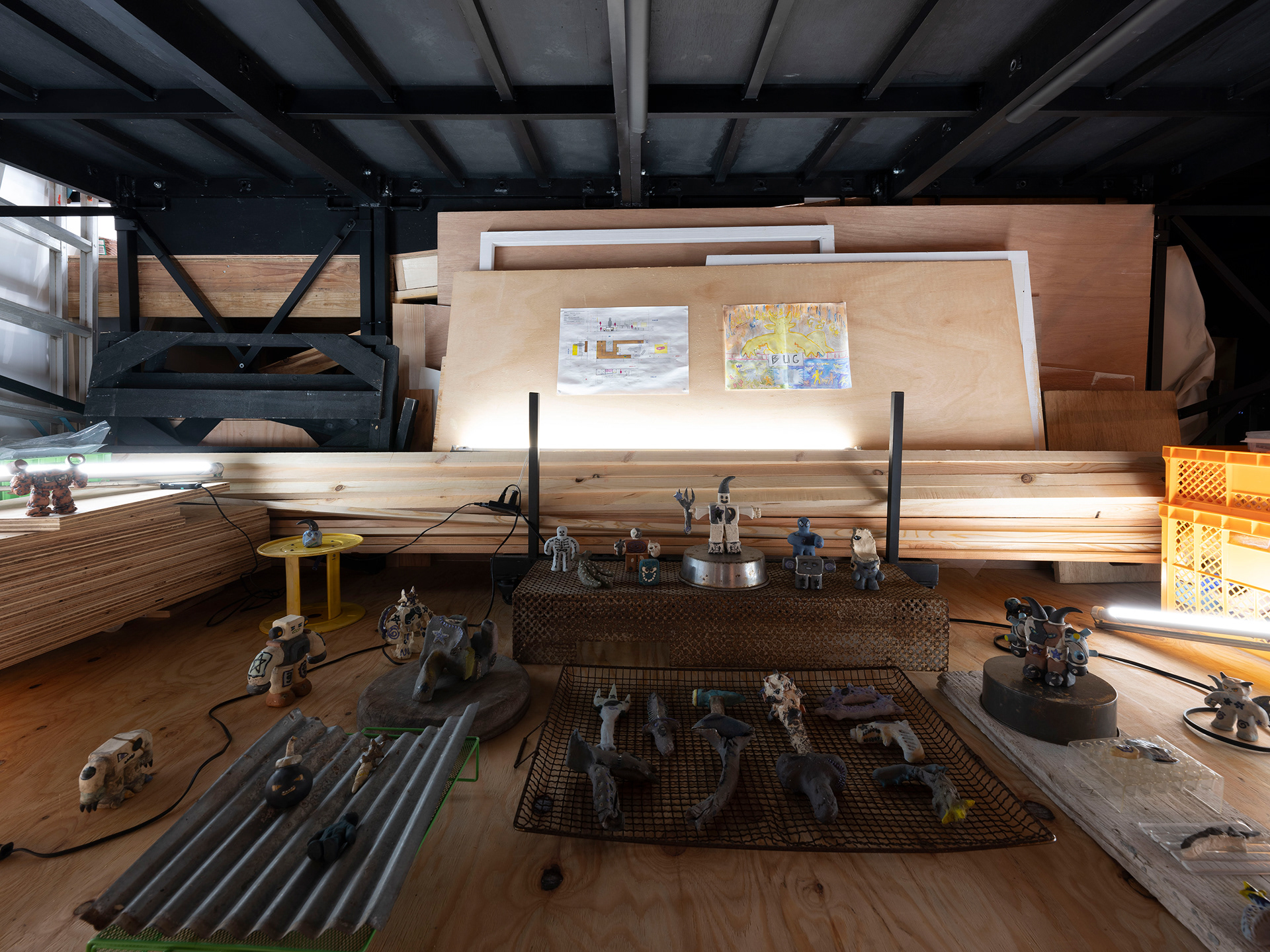
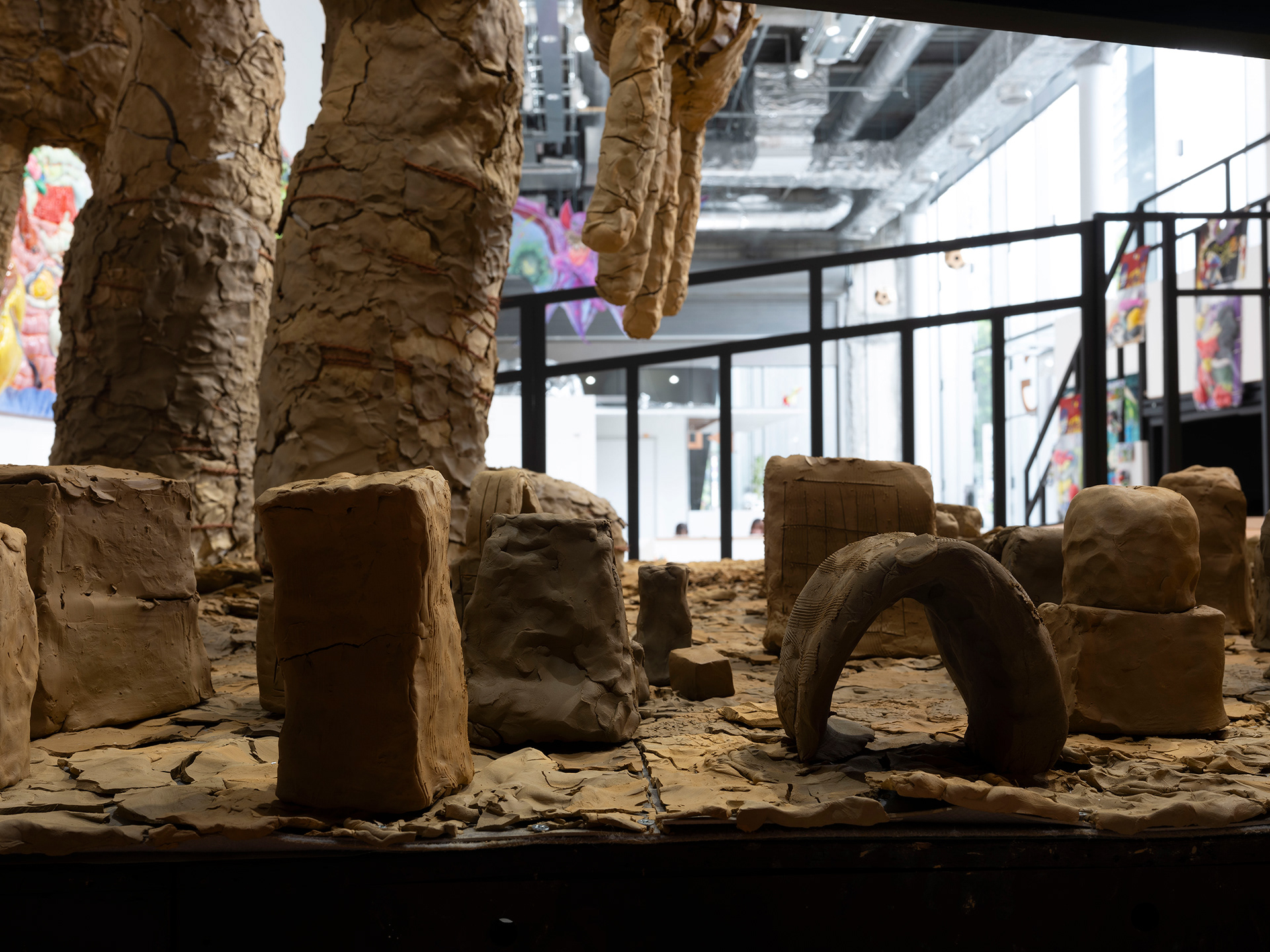
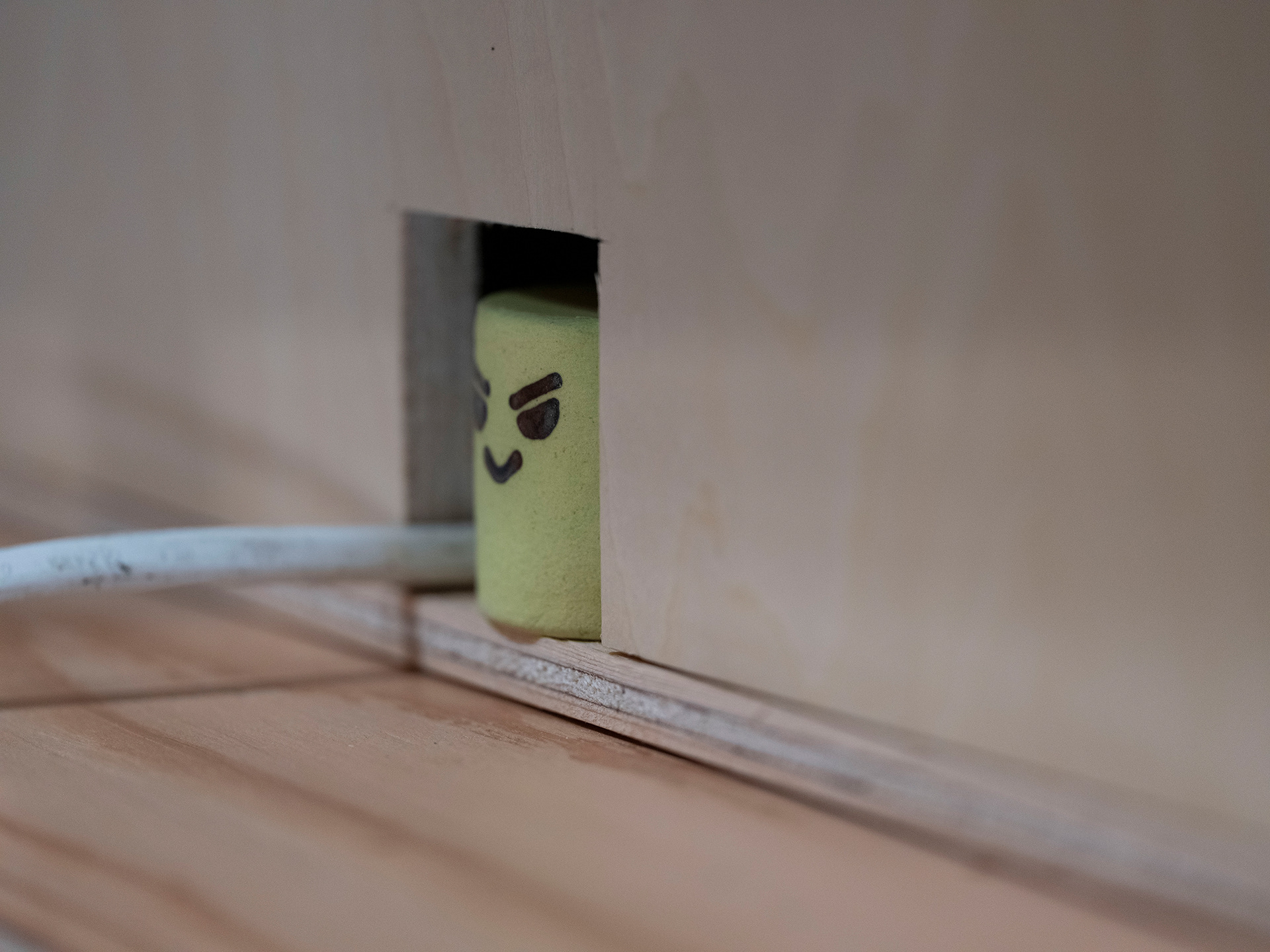
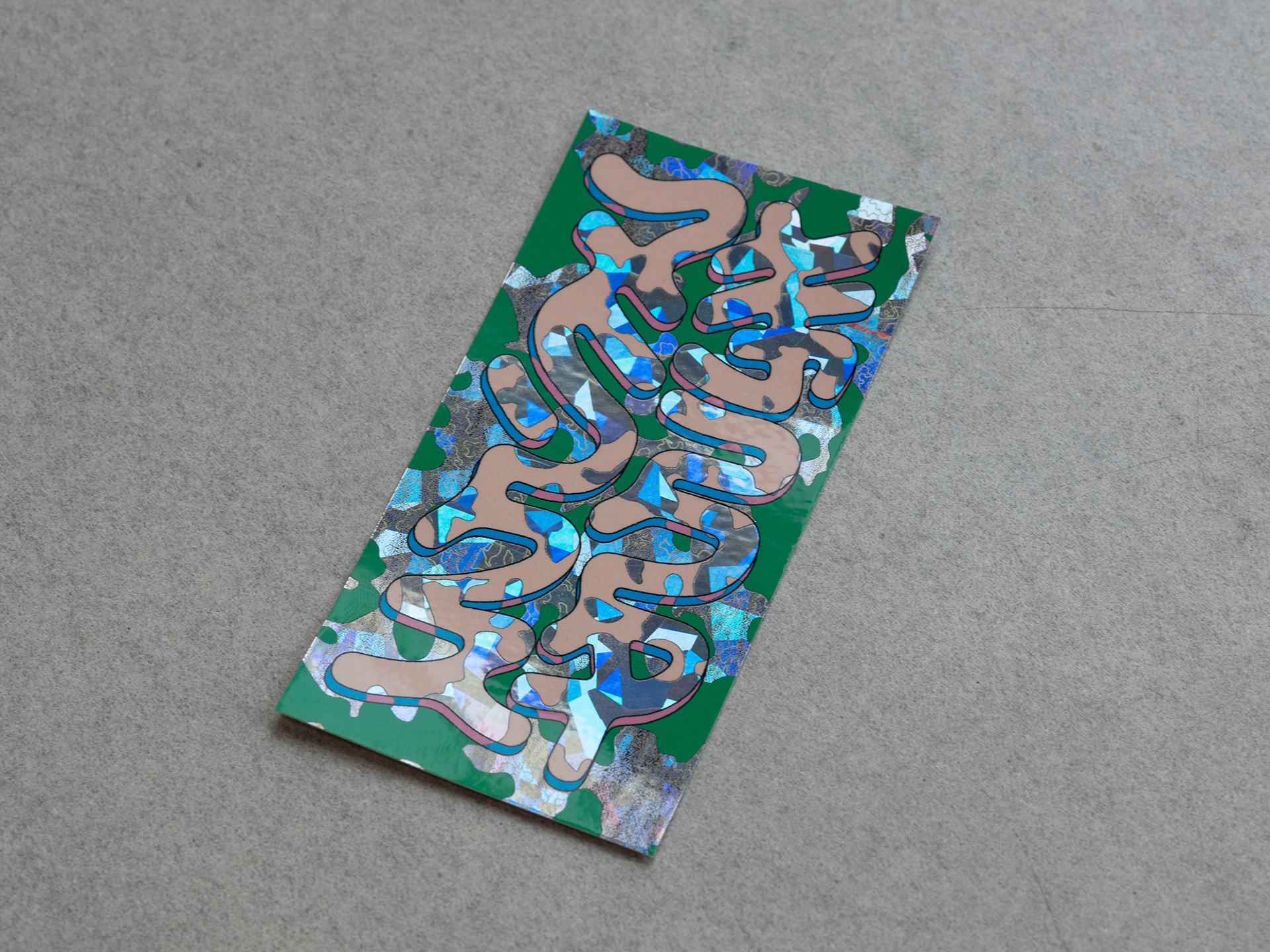
Character Matrix is a group exhibition curated by Takakurakazuki, centered on character-based expression. Organized as a collaborative project with BUG, the exhibition featured six artists—Yume Aoyama, Sawako Kageyama, Tomoya Kuki, Takakurakazuki, Meichin Romana Tanimura, and Takumi Hirayama—presenting a total of 151 works, including 131 new pieces. The exhibition set out to distance itself from the “bishōjo anime–style character images” that have often been treated as the mainstream of character expression in Japanese contemporary art, instead focusing on character practices that belong to lineages outside anime and otaku culture. Rather than approaching characters primarily through narrative and consumption, the exhibition emphasized characters as entities that are operated, function as vessels (yorishiro), and come into being through ritual and repetition.
The exhibition space was designed as a three-dimensional environment inspired by the sculptural mandala of Mount Kōya and the spatial composition of the Danjō Garan. Using platforms and slopes, the layout encouraged visitors to move through the space while shifting their viewpoints and bodily positions, actively renewing their relationships with the works. By arranging the works of the six artists—many of which draw from influences such as video games, tokusatsu, toys, and cartoon animation—in a parallel configuration, the exhibition presented an ecosystem of “character variation” that also connects to yōkai, deities, and polytheistic worldviews. This ecosystem was articulated as a mandala-like structure, conceptualized as the Character Matrix.
『キャラクターマトリクス』はたかくらかずきがキュレーションを担当した、キャラクター表現を主題とするグループ展。BUGとの共同企画として開催され、青山夢、影山紗和子、九鬼知也、たかくらかずき、谷村メイチンロマーナ、平山匠の6名が参加し、計151点(新作131点)の作品を発表した。本展は、日本の現代美術において主流とされてきた「美少女アニメ的キャラクター像」から距離を取り、アニメ/オタクカルチャー以外の系譜に属するキャラクター表現を扱うことを目的としている。物語と消費を前提に語られてきたキャラクター論とは異なり、操作される存在、依代として機能する存在、儀式や反復の中で成立する存在としてのキャラクターに焦点を当てている。
展示空間は、高野山の立体曼荼羅や壇上伽藍の構成からインスピレーションを受け、高台やスロープを用いた立体的な構成によって設計された。来場者は視点や身体の動きを変えながら空間を巡り、作品との関係性を能動的に更新していく。ゲーム、特撮、玩具、カートゥーンアニメなどの影響を受けた6名の作品を並列的に配置することで、妖怪や神仏、多神教的世界観とも接続する「キャラクターバリエーション」の生態系を、ひとつの曼荼羅的構造=キャラクター・マトリクスとして提示した。
Character Matrix is a group exhibition curated by Takakurakazuki, centered on character-based expression. Organized as a collaborative project with BUG, the exhibition featured six artists—Yume Aoyama, Sawako Kageyama, Tomoya Kuki, Takakurakazuki, Meichin Romana Tanimura, and Takumi Hirayama—presenting a total of 151 works, including 131 new pieces. The exhibition set out to distance itself from the “bishōjo anime–style character images” that have often been treated as the mainstream of character expression in Japanese contemporary art, instead focusing on character practices that belong to lineages outside anime and otaku culture. Rather than approaching characters primarily through narrative and consumption, the exhibition emphasized characters as entities that are operated, function as vessels (yorishiro), and come into being through ritual and repetition.
The exhibition space was designed as a three-dimensional environment inspired by the sculptural mandala of Mount Kōya and the spatial composition of the Danjō Garan. Using platforms and slopes, the layout encouraged visitors to move through the space while shifting their viewpoints and bodily positions, actively renewing their relationships with the works. By arranging the works of the six artists—many of which draw from influences such as video games, tokusatsu, toys, and cartoon animation—in a parallel configuration, the exhibition presented an ecosystem of “character variation” that also connects to yōkai, deities, and polytheistic worldviews. This ecosystem was articulated as a mandala-like structure, conceptualized as the Character Matrix.
『キャラクターマトリクス』はたかくらかずきがキュレーションを担当した、キャラクター表現を主題とするグループ展。BUGとの共同企画として開催され、青山夢、影山紗和子、九鬼知也、たかくらかずき、谷村メイチンロマーナ、平山匠の6名が参加し、計151点(新作131点)の作品を発表した。本展は、日本の現代美術において主流とされてきた「美少女アニメ的キャラクター像」から距離を取り、アニメ/オタクカルチャー以外の系譜に属するキャラクター表現を扱うことを目的としている。物語と消費を前提に語られてきたキャラクター論とは異なり、操作される存在、依代として機能する存在、儀式や反復の中で成立する存在としてのキャラクターに焦点を当てている。
展示空間は、高野山の立体曼荼羅や壇上伽藍の構成からインスピレーションを受け、高台やスロープを用いた立体的な構成によって設計された。来場者は視点や身体の動きを変えながら空間を巡り、作品との関係性を能動的に更新していく。ゲーム、特撮、玩具、カートゥーンアニメなどの影響を受けた6名の作品を並列的に配置することで、妖怪や神仏、多神教的世界観とも接続する「キャラクターバリエーション」の生態系を、ひとつの曼荼羅的構造=キャラクター・マトリクスとして提示した。
Character Matrix: Concept Manga/ キャラクターマトリクス コンセプト漫画
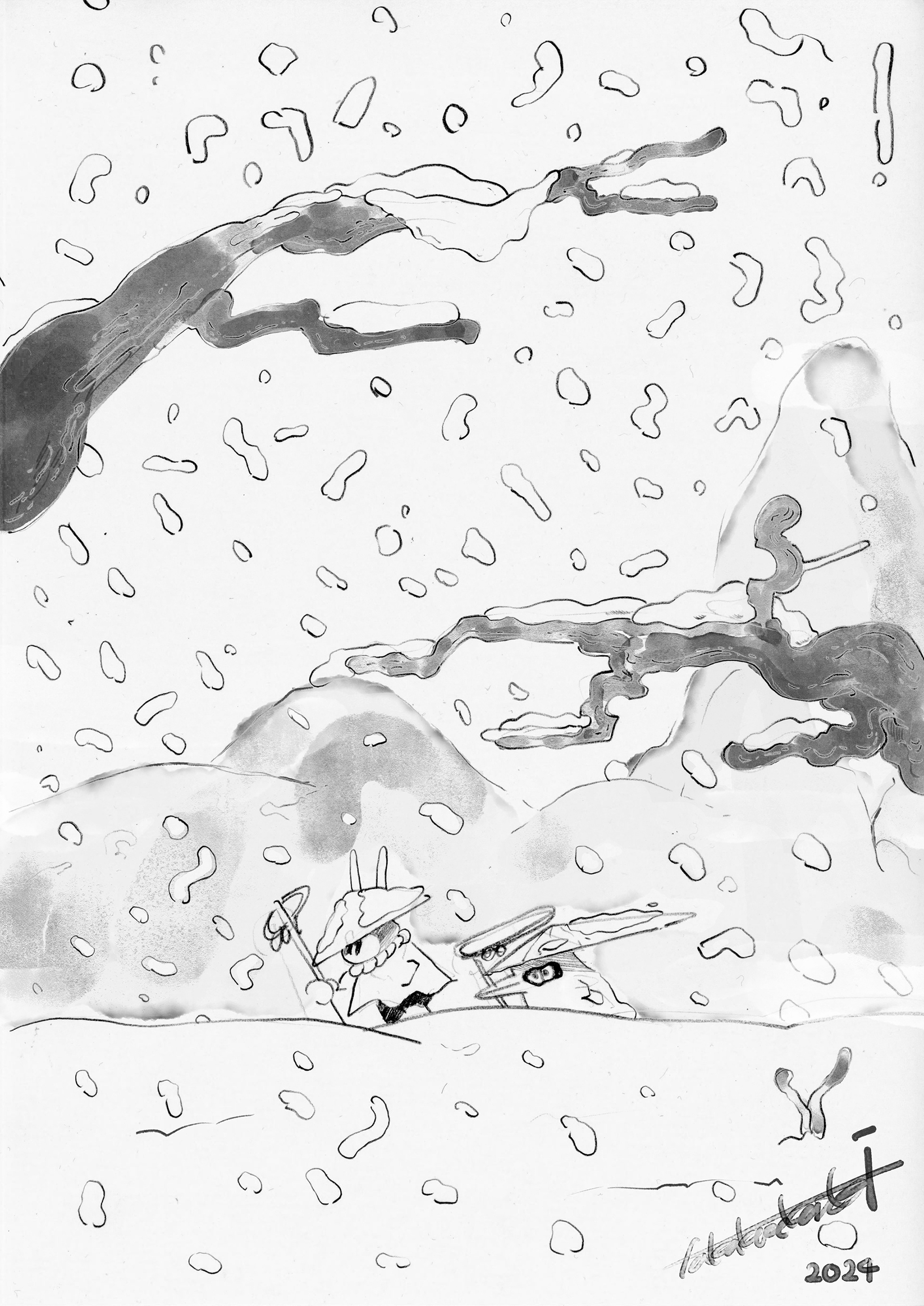
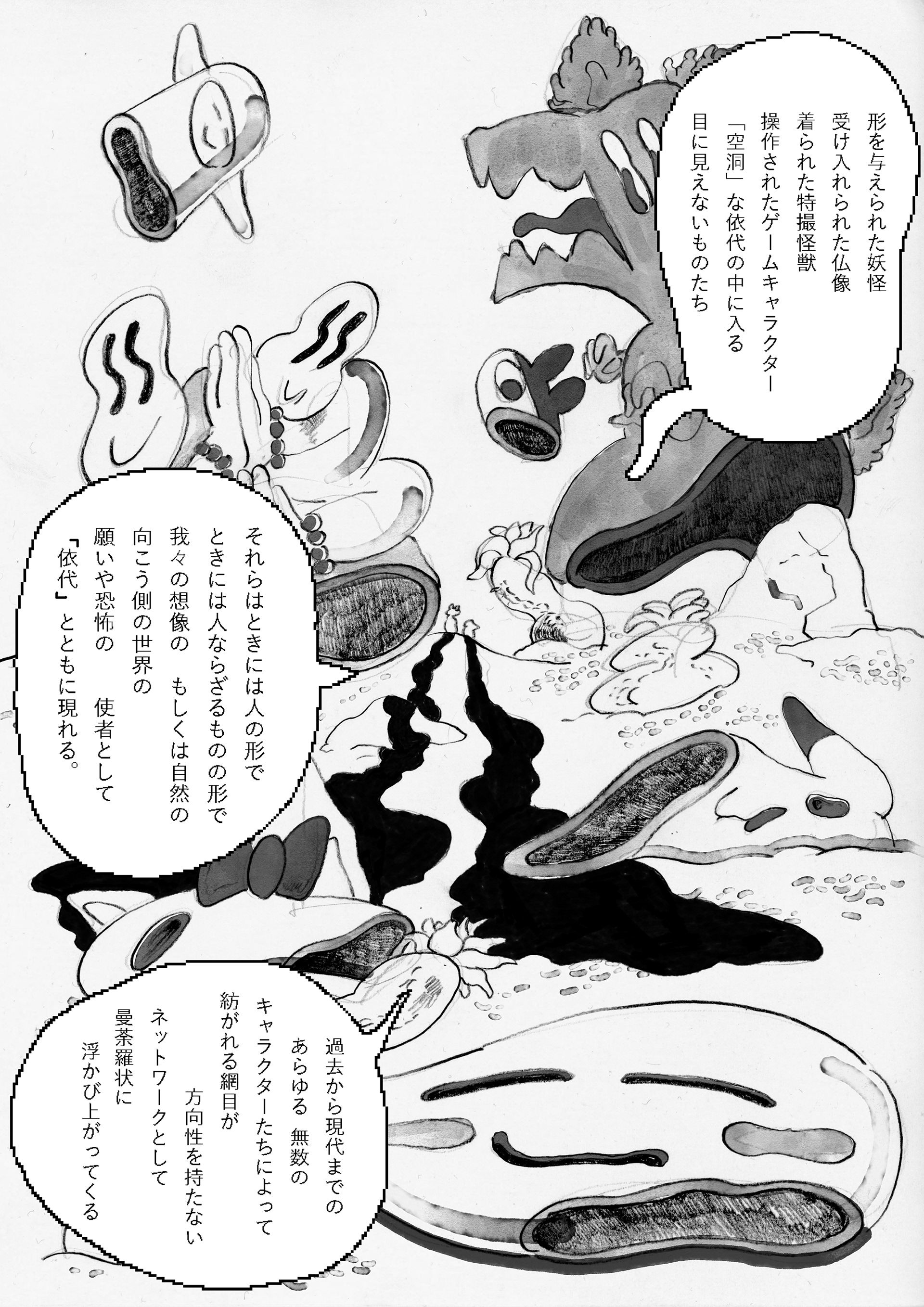
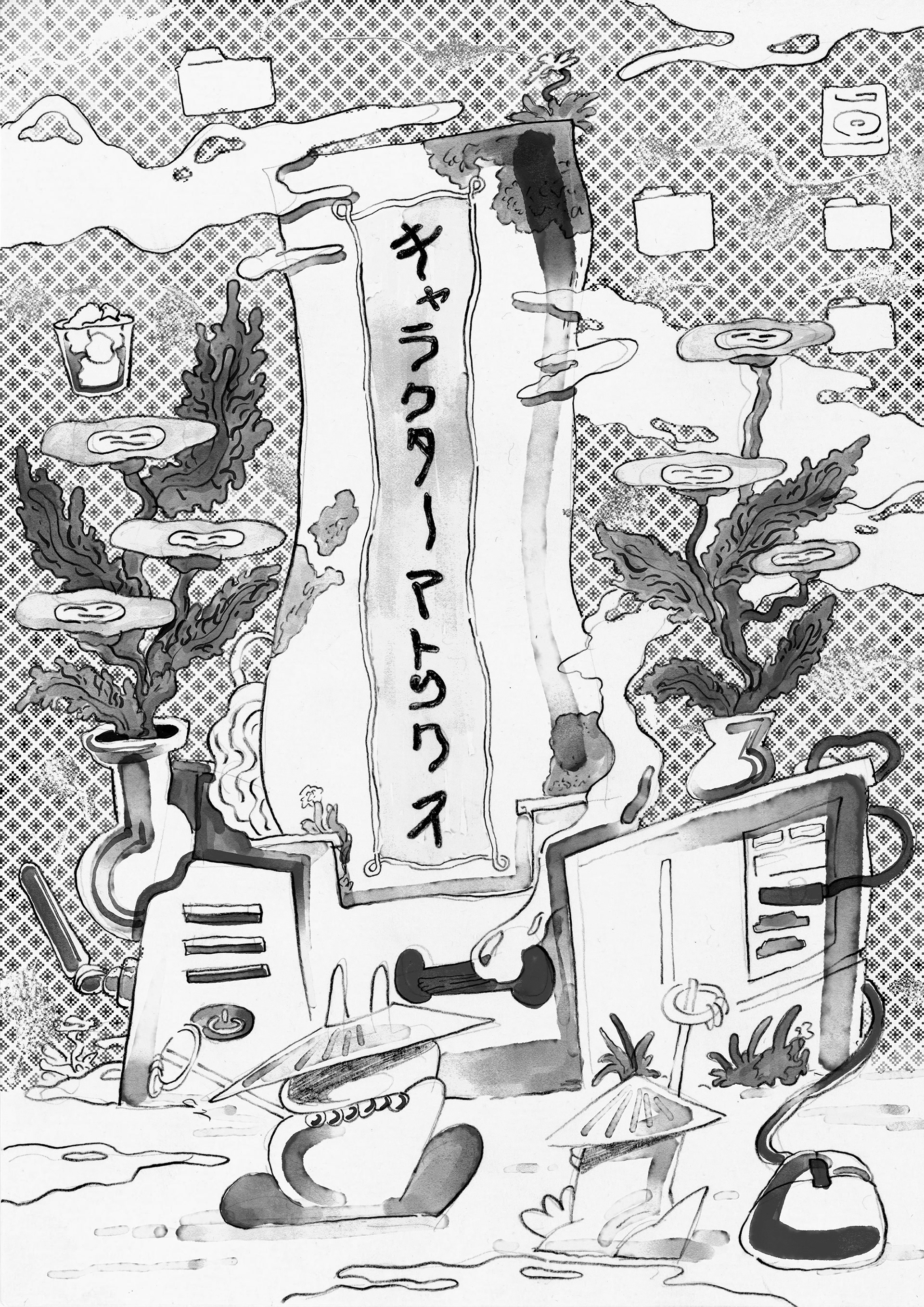
Character Matrix Manga – English Translation
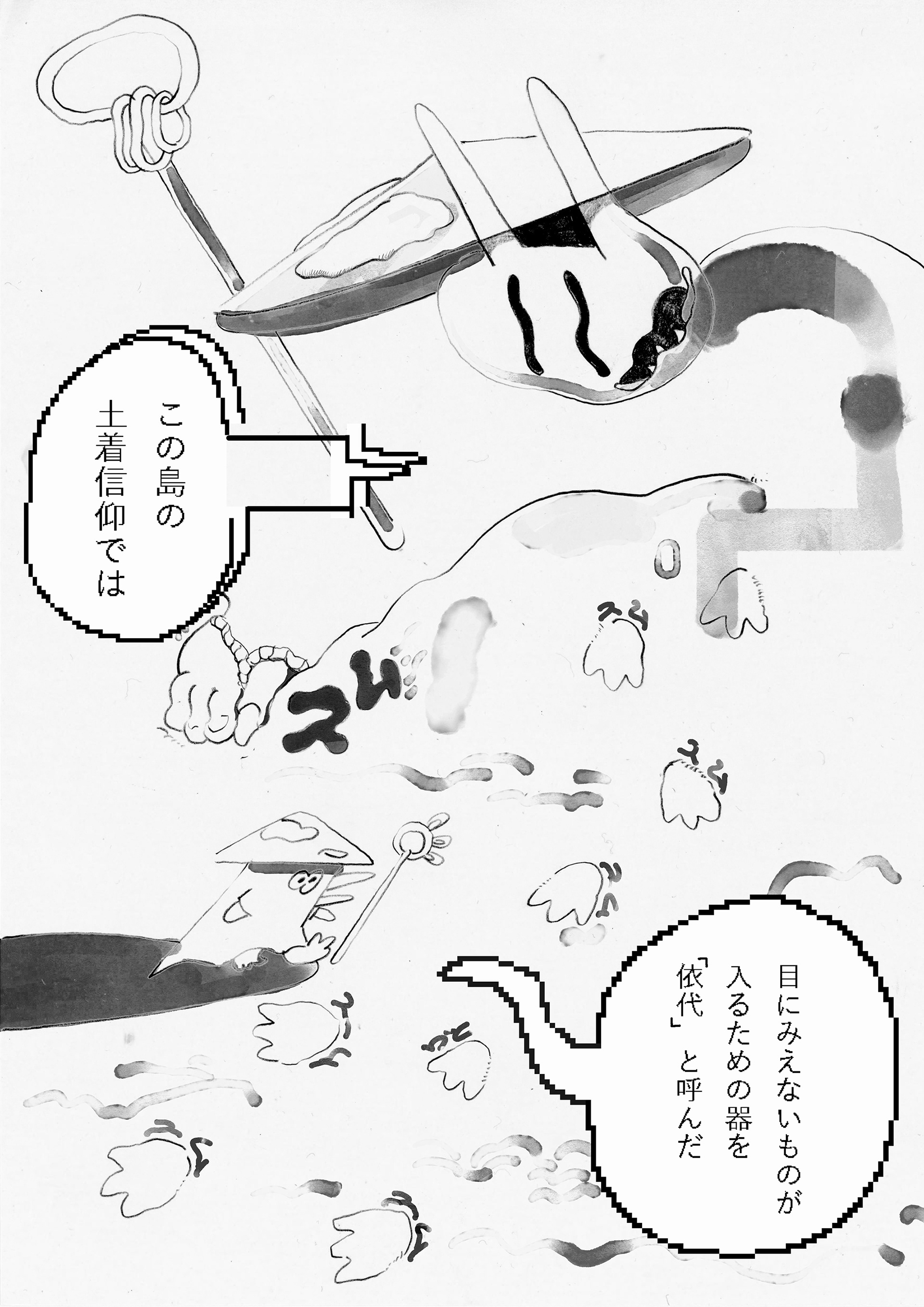
1.In the indigenous beliefs of this island, a vessel prepared for invisible beings to enter was called a yorishiro.
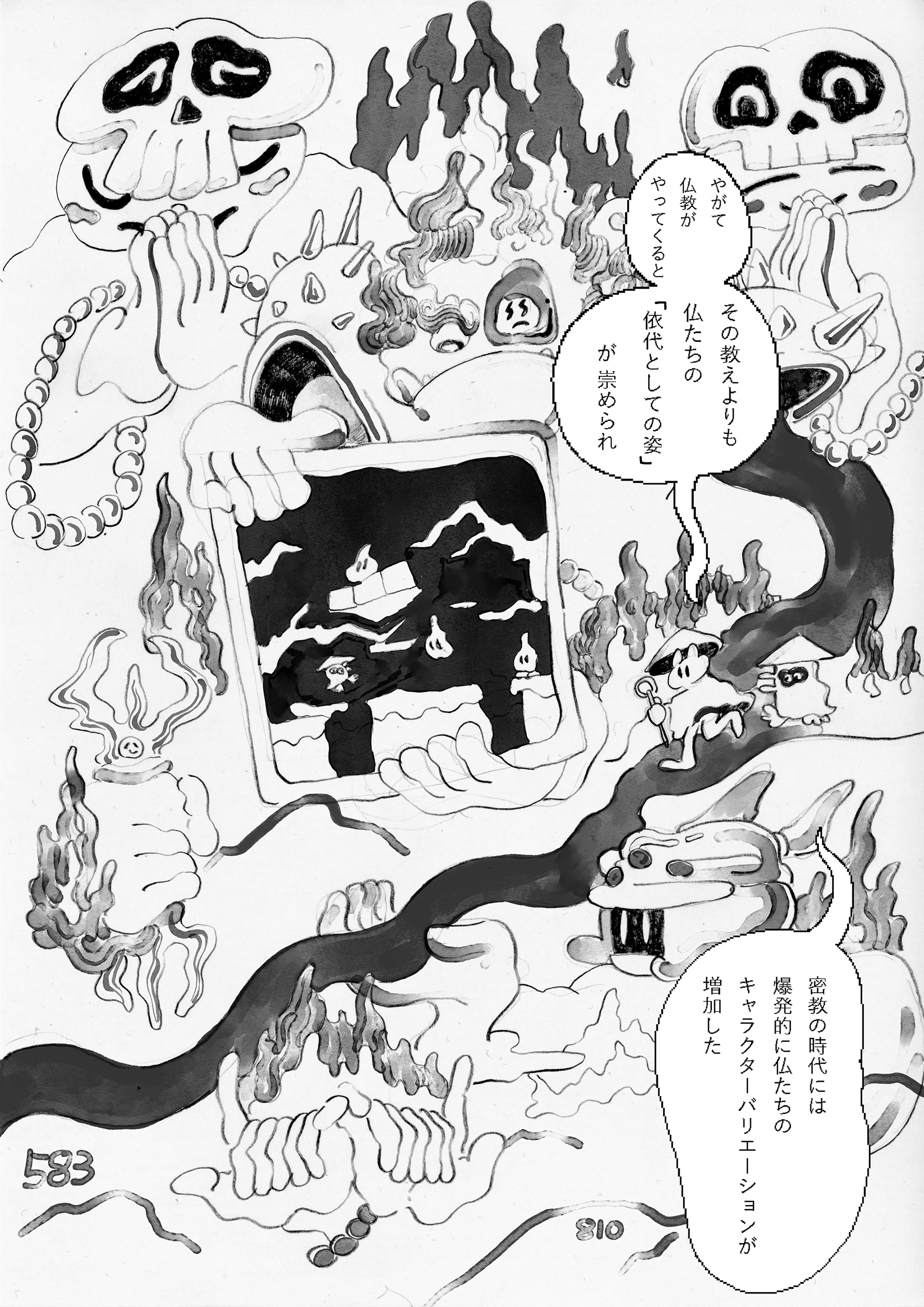
2.When Buddhism eventually arrived, it was not so much the teachings of Buddhism that were venerated as the figures of the Buddhas as yorishiro. During the era of Esoteric Buddhism, the character variations of Buddhas increased explosively.
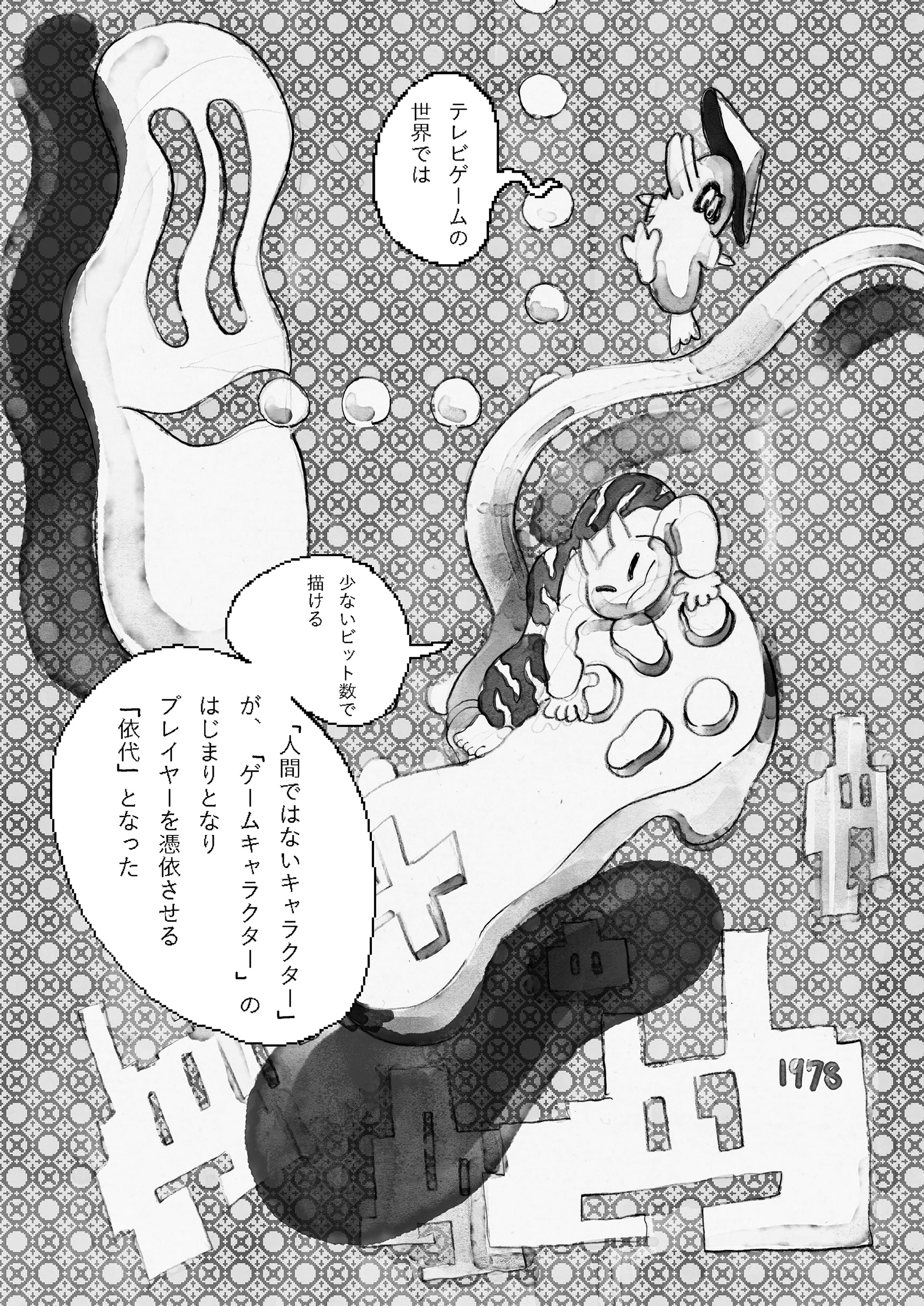
3.In the world of video games, “non-human characters,” which could be depicted with a limited number of bits, became the origin of “game characters,” and served as yorishiro into which players could be possessed.
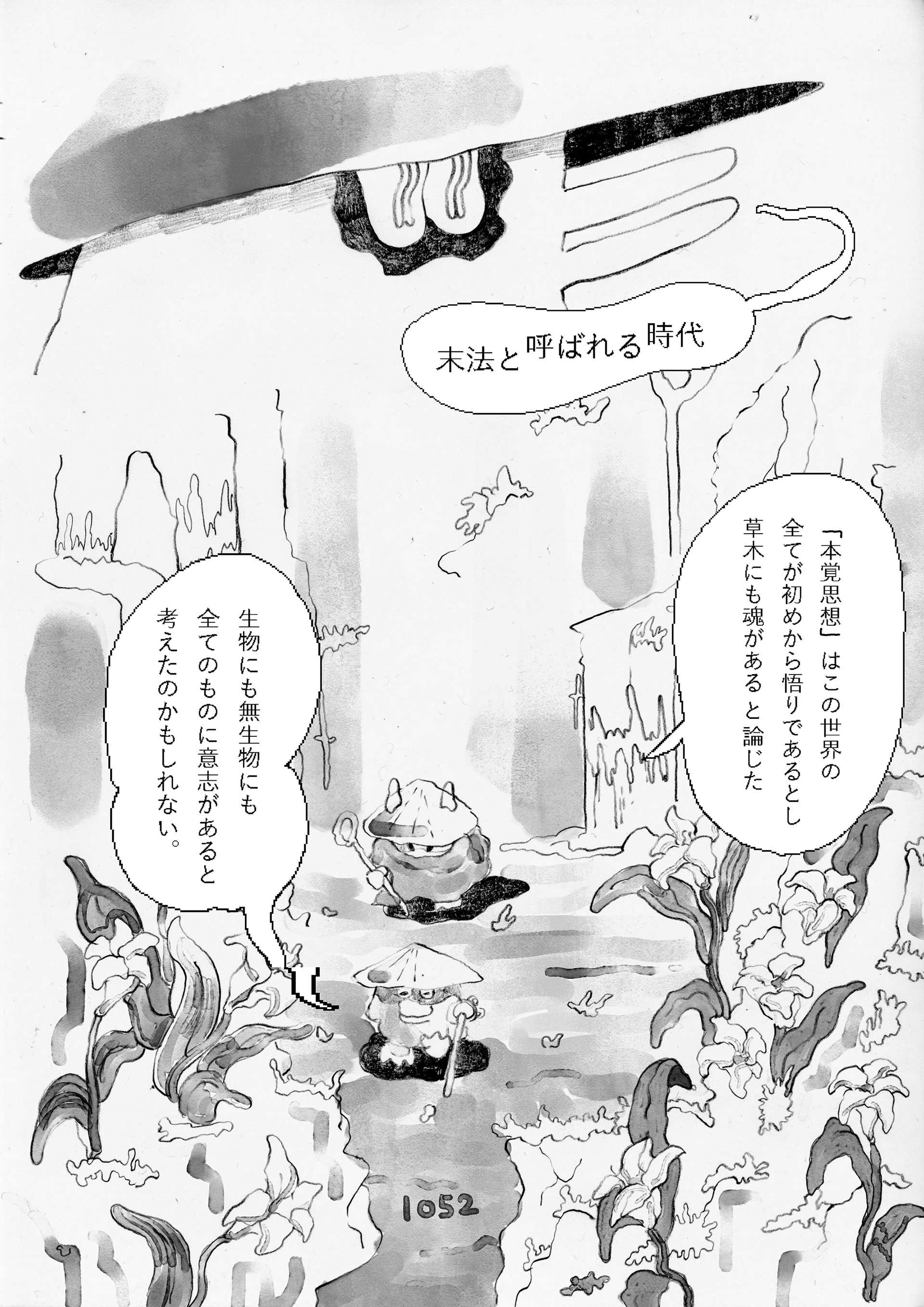
4.In the period known as Mappō (the Latter Days of the Dharma), the doctrine of Hongaku (Original Enlightenment) held that everything in this world is enlightened from the very beginning, and argued that even plants and trees possess souls. It may have been thought that all things, both living and non-living, possess will.
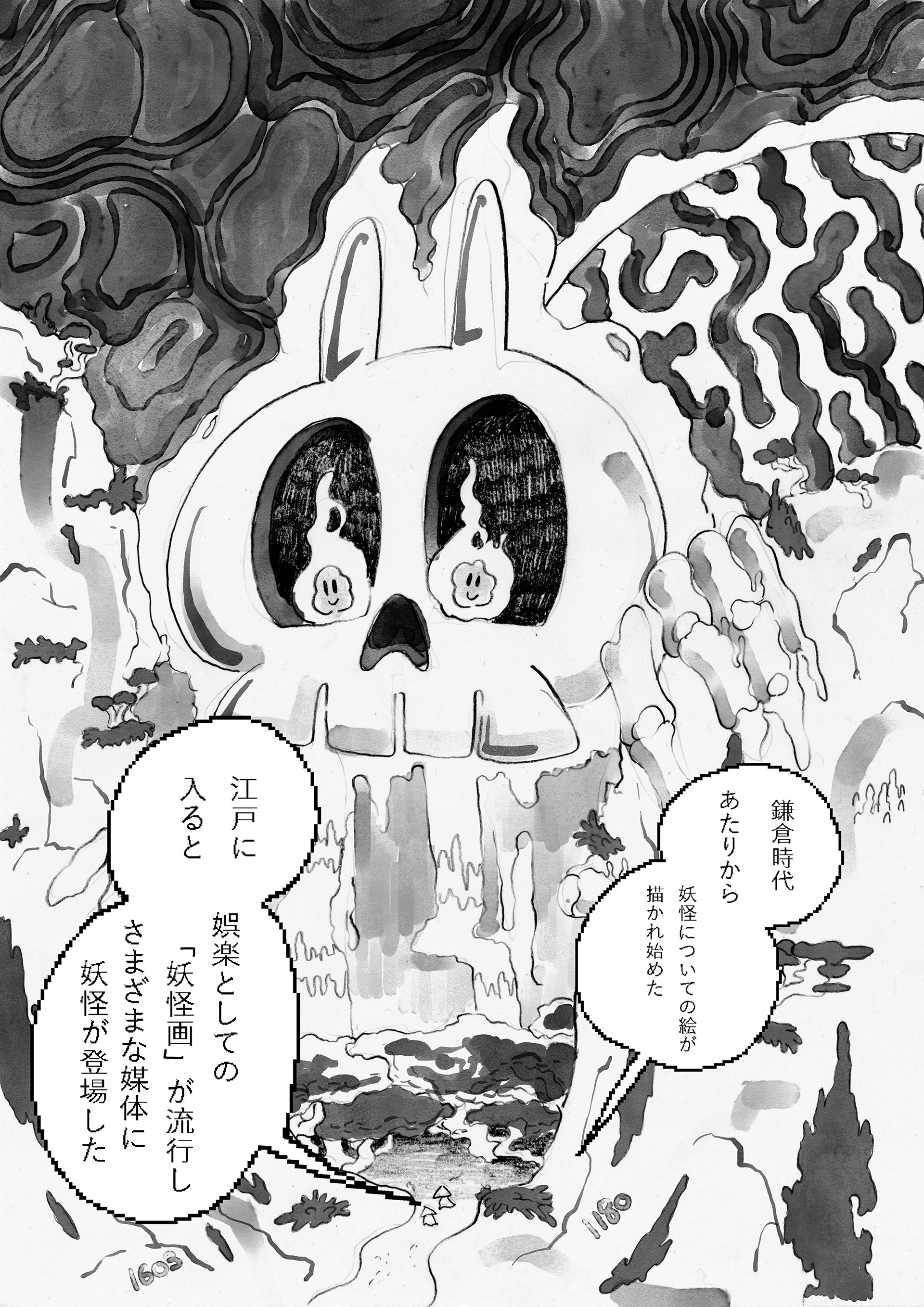
5.Around the Kamakura period, images of yōkai began to be drawn. With the advent of the Edo period, “yōkai pictures” became popular as a form of entertainment, and yōkai appeared across a wide range of media.
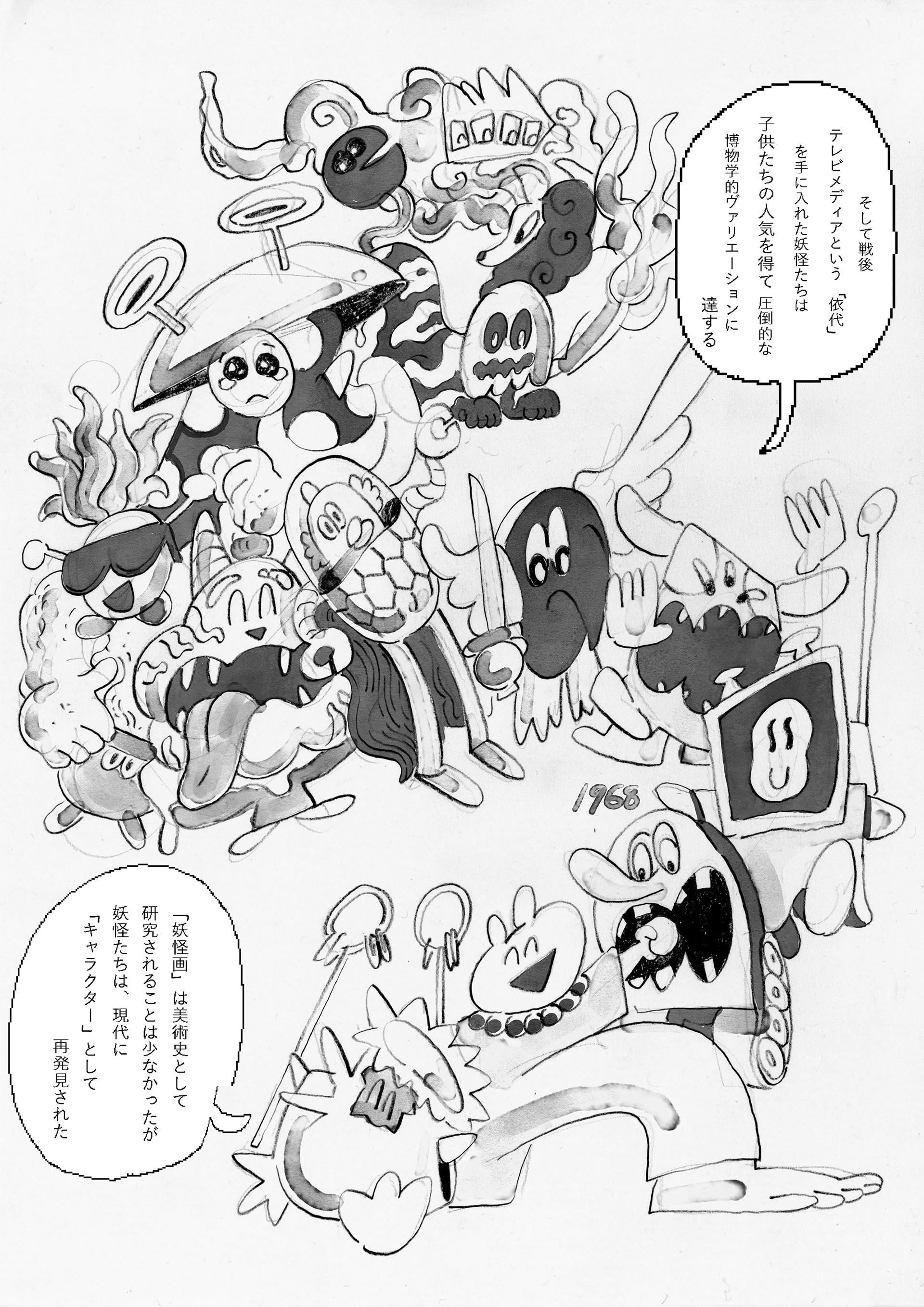
6.After the war, yōkai acquired television media as a new yorishiro, gained popularity among children, and reached an overwhelming level of encyclopedic variation. Although “yōkai pictures” were rarely studied as art history, yōkai were rediscovered in the modern era as “characters.”
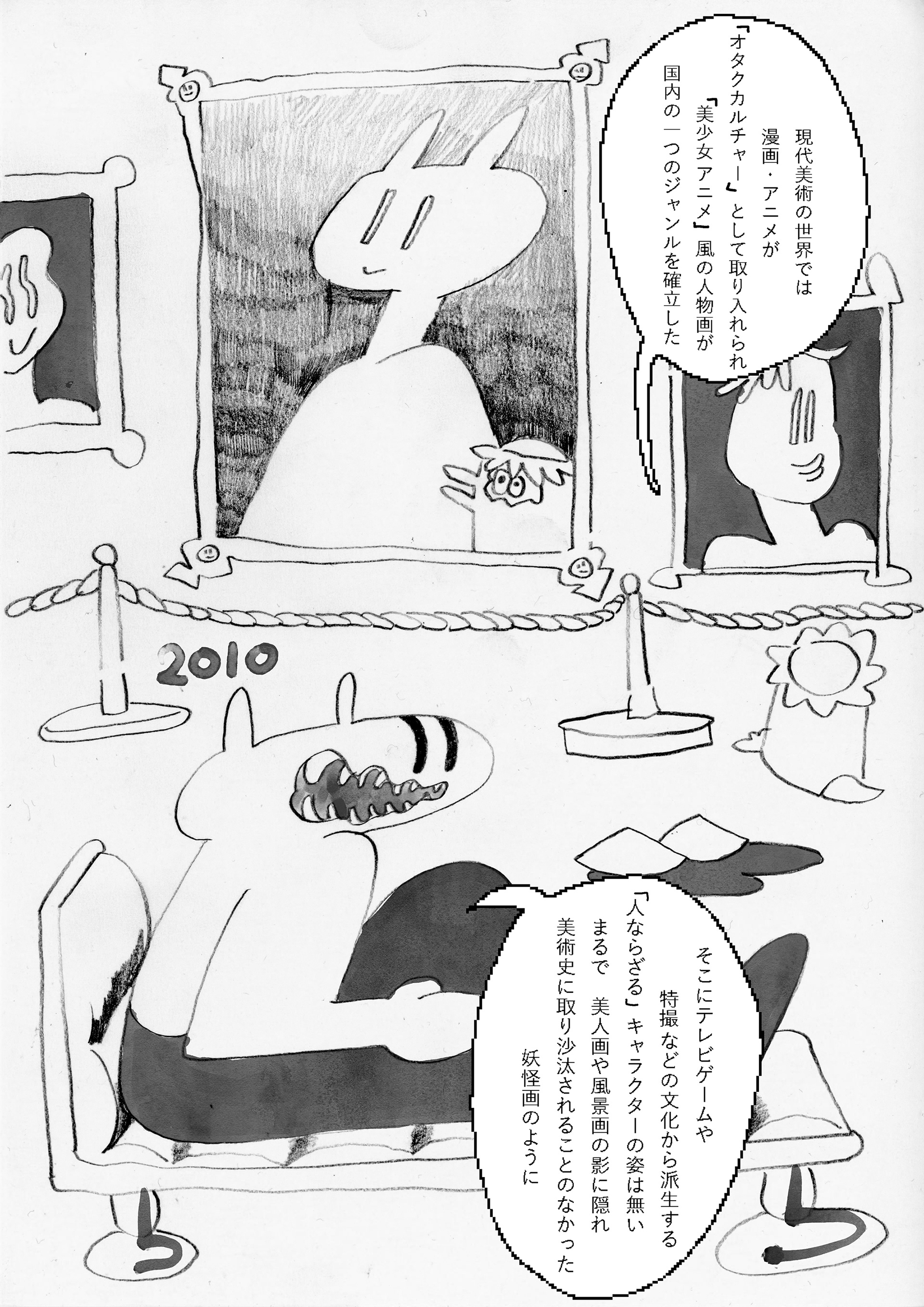
7.In the world of contemporary art, manga and anime were incorporated as “otaku culture,” and figure paintings in the style of “bishōjo anime” established themselves as one domestic genre. There, the figures of “non-human” characters derived from cultures such as video games and tokusatsu are absent—much like how yōkai, hidden in the shadows of bijin-ga and landscape painting, were rarely taken up in art history.
8.Yōkai given form, accepted Buddhist statues, worn tokusatsu monsters, and operated game characters. Invisible beings enter into these “hollow” yorishiro. Sometimes in human form, and sometimes in non-human form, they appear together with yorishiro as messengers of wishes and fears from the world of our imagination—or from beyond nature. A web woven by countless characters, from the past to the present, rises into view upon the mandala as a network without direction.
1.In the indigenous beliefs of this island, a vessel prepared for invisible beings to enter was called a yorishiro.
2.When Buddhism eventually arrived, it was not so much the teachings of Buddhism that were venerated as the figures of the Buddhas as yorishiro. During the era of Esoteric Buddhism, the character variations of Buddhas increased explosively.
3.In the world of video games, “non-human characters,” which could be depicted with a limited number of bits, became the origin of “game characters,” and served as yorishiro into which players could be possessed.
4.In the period known as Mappō (the Latter Days of the Dharma), the doctrine of Hongaku (Original Enlightenment) held that everything in this world is enlightened from the very beginning, and argued that even plants and trees possess souls. It may have been thought that all things, both living and non-living, possess will.
5.Around the Kamakura period, images of yōkai began to be drawn. With the advent of the Edo period, “yōkai pictures” became popular as a form of entertainment, and yōkai appeared across a wide range of media.
6.After the war, yōkai acquired television media as a new yorishiro, gained popularity among children, and reached an overwhelming level of encyclopedic variation. Although “yōkai pictures” were rarely studied as art history, yōkai were rediscovered in the modern era as “characters.”
7.In the world of contemporary art, manga and anime were incorporated as “otaku culture,” and figure paintings in the style of “bishōjo anime” established themselves as one domestic genre. There, the figures of “non-human” characters derived from cultures such as video games and tokusatsu are absent—much like how yōkai, hidden in the shadows of bijin-ga and landscape painting, were rarely taken up in art history.
8.Yōkai given form, accepted Buddhist statues, worn tokusatsu monsters, and operated game characters. Invisible beings enter into these “hollow” yorishiro. Sometimes in human form, and sometimes in non-human form, they appear together with yorishiro as messengers of wishes and fears from the world of our imagination—or from beyond nature. A web woven by countless characters, from the past to the present, rises into view upon the mandala as a network without direction.
テキスト 現代美術とヴィデオゲーム
Author: Takakurakazuki
Supervised by: Daichi Nakagawa
Edited by: Bijutsu Techo Online Editorial Team
YEAR: 2024–2025
Supervised by: Daichi Nakagawa
Edited by: Bijutsu Techo Online Editorial Team
YEAR: 2024–2025
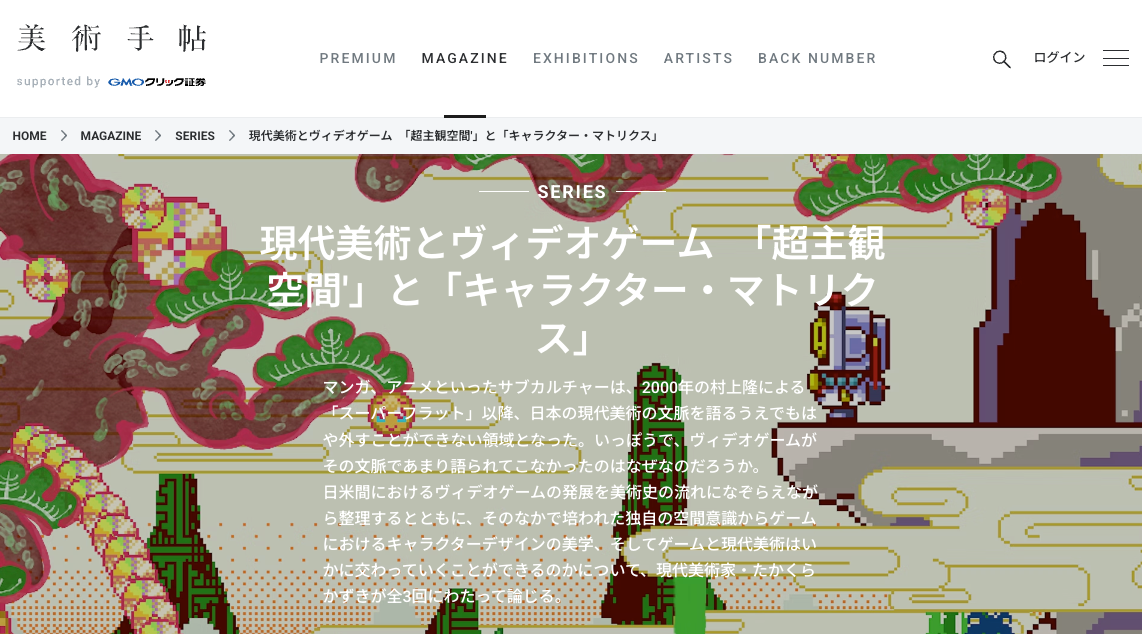
A serialized series of paid articles for Bijutsu Techo Online focusing on the theme of “Contemporary Art and Video Games.” Supervised by critic Daichi Nakagawa, the three-part series examines the relationship between contemporary art and game culture from a theoretical perspective.
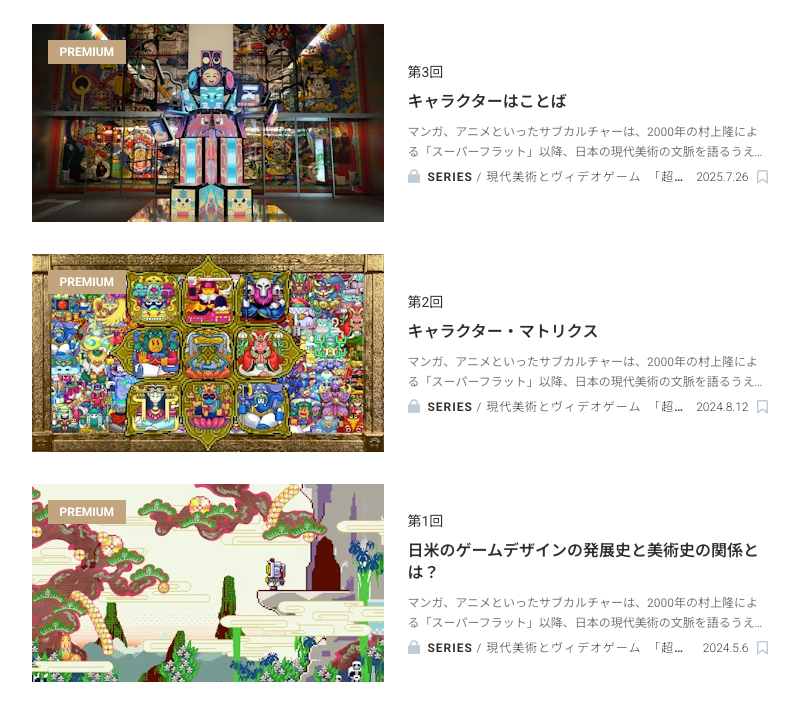
The first installment compares the histories of contemporary art and video games, reexamining teamLab’s theory of the “Ultra Subjective Space.” The second installment centers on the theory of Character Matrix, discussing character variation in tokusatsu and video games in relation to mandalas and yōkai. The third installment, titled Characters Are Words, connects digital experience with deeper layers of Eastern philosophy—including the Huayan concept of jiji muge hōkai, Indra’s Net, and Kūkai’s shōji jissōgi—and explores the future of character culture while identifying shared structures between gameplay (Play) and ritual or prayer (Pray).
The first installment compares the histories of contemporary art and video games, reexamining teamLab’s theory of the “Ultra Subjective Space.” The second installment centers on the theory of Character Matrix, discussing character variation in tokusatsu and video games in relation to mandalas and yōkai. The third installment, titled Characters Are Words, connects digital experience with deeper layers of Eastern philosophy—including the Huayan concept of jiji muge hōkai, Indra’s Net, and Kūkai’s shōji jissōgi—and explores the future of character culture while identifying shared structures between gameplay (Play) and ritual or prayer (Pray).
美術手帖オンラインの有料記事として、「現代美術とヴィデオゲーム」を主題とする論考を連載した。評論家の中川大地を監修に迎え、全3回にわたり、現代美術とゲーム文化の関係を理論的に検討している。
第1回では、現代美術とヴィデオゲームの歴史を照らし合わせ、チームラボの理論「超主観空間」を再考した。第2回では、《キャラクター・マトリクス》の理論を中心に、特撮からビデオゲームにおけるキャラクターバリエーション、曼荼羅、妖怪との関係について論じた。第3回「キャラクターはことば」では、デジタル体験と華厳思想の事々無碍法界、インドラの網、空海の声字実相義を接続し、キャラクター文化の今後を考察するとともに、ゲームプレイ(Play)と儀式・祈り(Pray)の共通構造を提示した。
第1回では、現代美術とヴィデオゲームの歴史を照らし合わせ、チームラボの理論「超主観空間」を再考した。第2回では、《キャラクター・マトリクス》の理論を中心に、特撮からビデオゲームにおけるキャラクターバリエーション、曼荼羅、妖怪との関係について論じた。第3回「キャラクターはことば」では、デジタル体験と華厳思想の事々無碍法界、インドラの網、空海の声字実相義を接続し、キャラクター文化の今後を考察するとともに、ゲームプレイ(Play)と儀式・祈り(Pray)の共通構造を提示した。
Art BIt Matrix -tokusatsu to videogame -
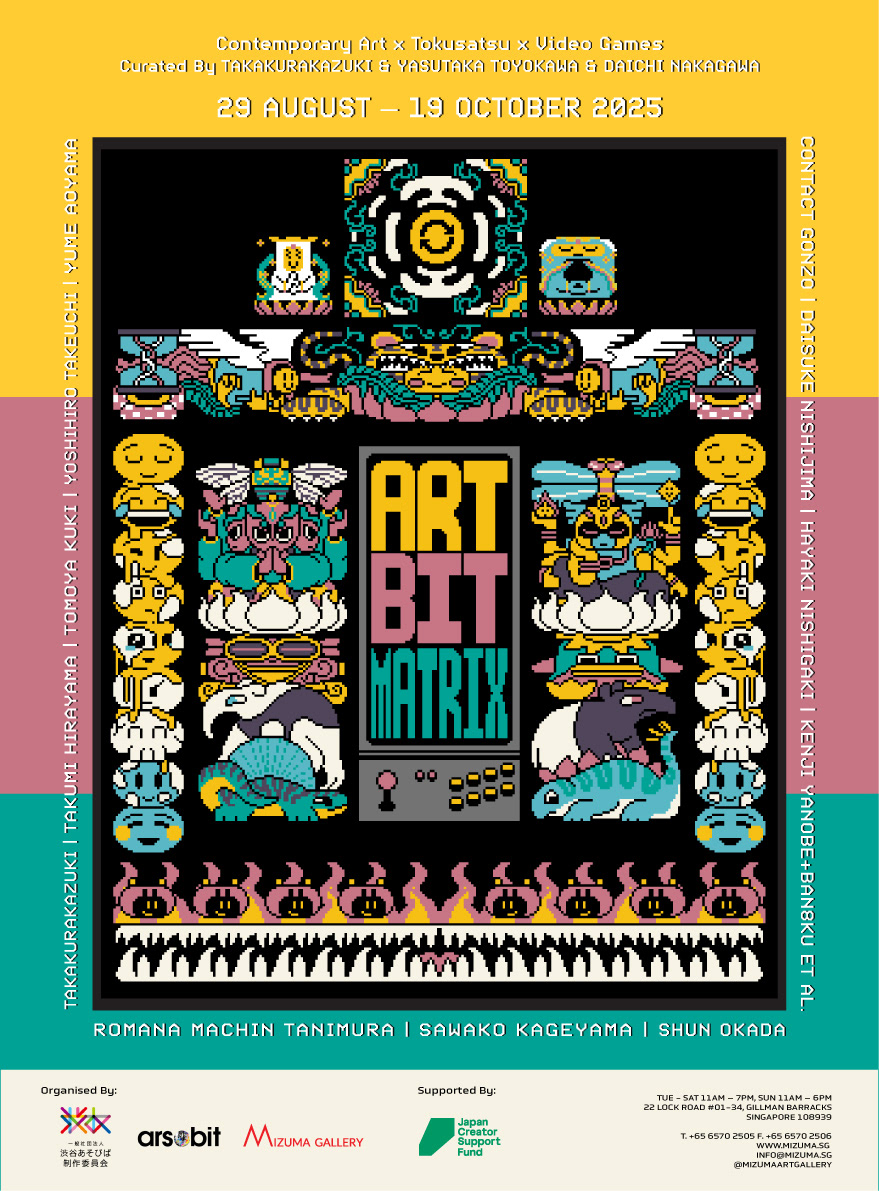
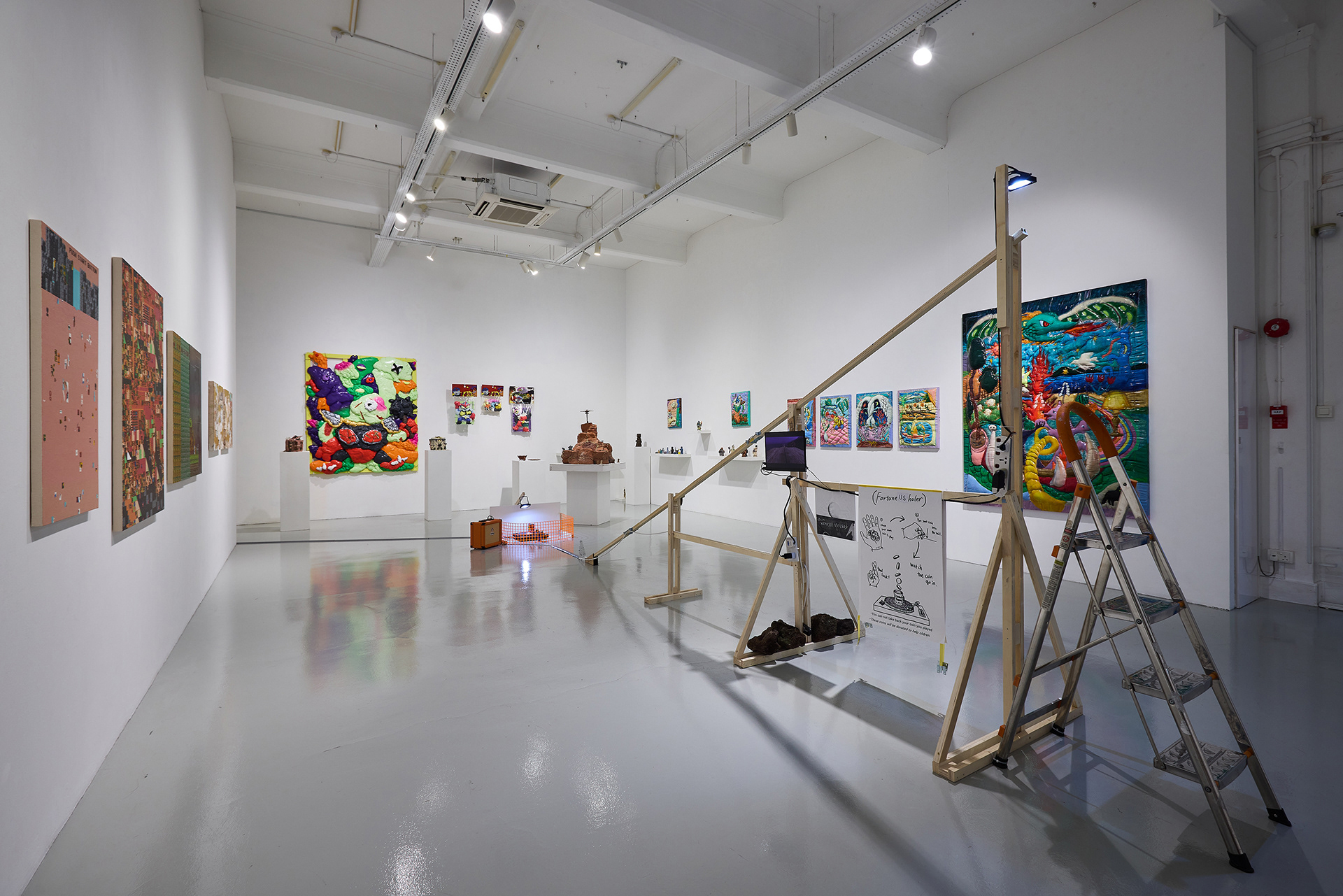
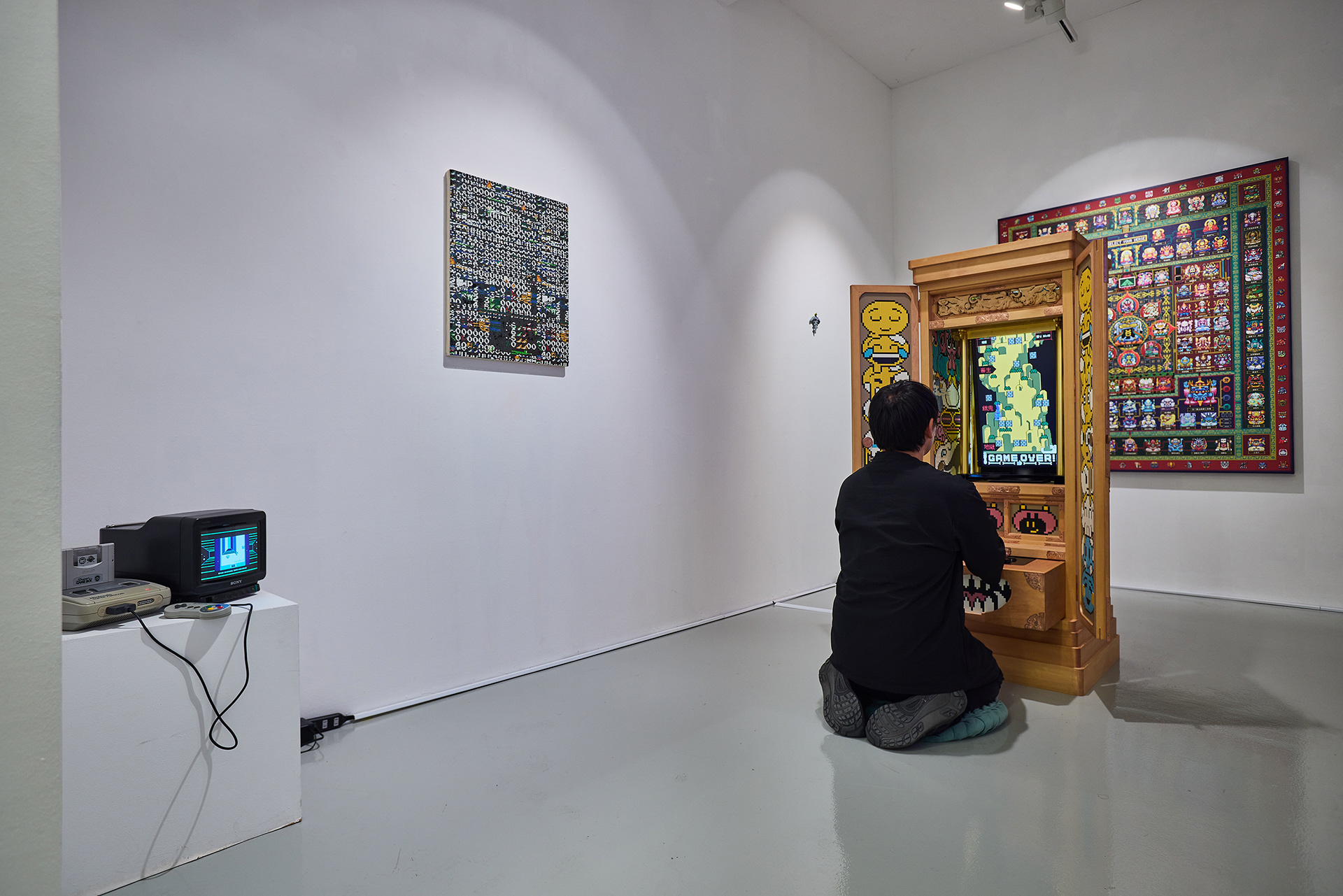
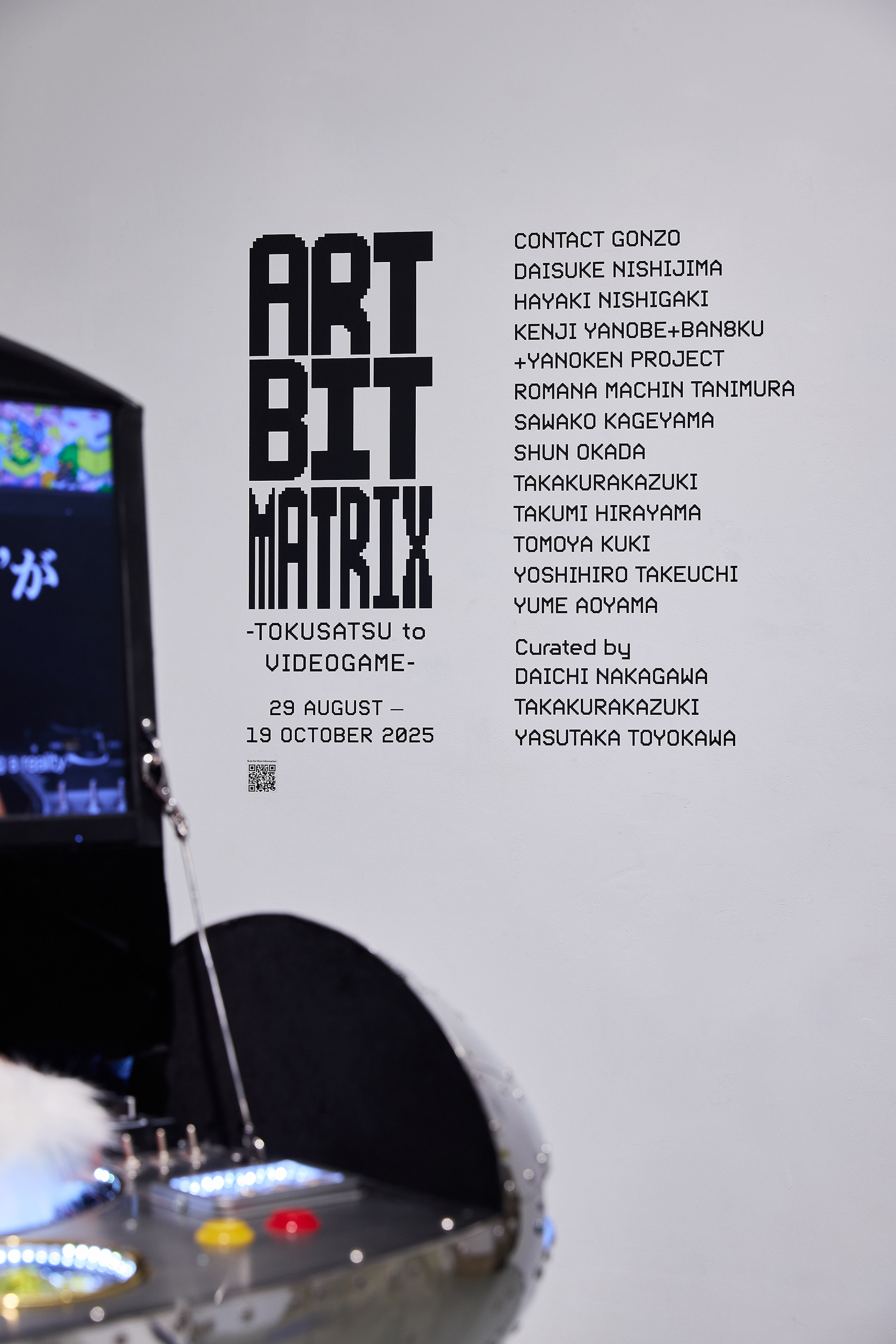
ART BIT MATRIX – TOKUSATSU to VIDEOGAME –
YEAR: 2025
VENUE: MIZUMA GALLERY (Singapore)
Curated by:Takakurakazuki / Yasuyuki Toyokawa / Daichi Nakagawa
Artists: Yume Aoyama / Shun Okada / Sawako Kageyama / Tomoya Kuki
contact GONZO / Takakurakazuki / Yoshihiro Takeuchi / Meichin Romana Tanimura
Hayaki Nishigaki / Daisuke Nishijima / Takumi Hirayama
Kenji Yanobe + BAN8KU + YANOKEN PROJECTS
YEAR: 2025
VENUE: MIZUMA GALLERY (Singapore)
Curated by:Takakurakazuki / Yasuyuki Toyokawa / Daichi Nakagawa
Artists: Yume Aoyama / Shun Okada / Sawako Kageyama / Tomoya Kuki
contact GONZO / Takakurakazuki / Yoshihiro Takeuchi / Meichin Romana Tanimura
Hayaki Nishigaki / Daisuke Nishijima / Takumi Hirayama
Kenji Yanobe + BAN8KU + YANOKEN PROJECTS
A multidisciplinary exhibition was held at MIZUMA GALLERY in Singapore, focusing on character-based expression as yorishiro—vessels—emerging from tokusatsu and video game culture. The exhibition examined the relationship between art and games by focusing on the intersection between the inherent game-like qualities of contemporary art and the artistic sensibilities found in indie games. The exhibition brought together twelve artist groups identified through two curatorial projects: art bit, curated by Daichi Nakagawa and Yasuyuki Toyokawa, which explores new possibilities between art and games; and Character Matrix, curated by Takakurakazuki, which reconsiders character variation derived from tokusatsu and video games as yorishiro. By overlaying value structures rooted in Western contemporary art history with accumulated layers of religion, play, and pop culture that flowed from Asia into the Japanese archipelago, the exhibition constructed a space in which diverse media—including painting, sculpture, video, and both analog and digital games—coexisted.
シンガポールのMIZUMA GALLERYにて、特撮とビデオゲームの文化から生まれた「依代」としてのキャラクター表現を主題とする複合アート展を開催した。本展は、現代アートに内在するゲーム性と、インディーゲームに見られる芸術性という二つの領域の接点に着目し、アートとゲームの関係を再検討する試みである。展示では、アートとゲームの新たな可能性を探る中川大地と豊川泰行による企画「art bit」展と、特撮やゲームに由来するキャラクターバリエーションを「依代」として捉え直すたかくらかずきによる企画「キャラクター・マトリクス」展、それぞれで発掘された12組のアーティストが合流した。西洋発の現代美術史における価値構造と、アジアから日本列島に流れ着いた宗教・遊戯・ポップカルチャーの蓄積を重ね合わせ、絵画、彫刻、映像、アナログおよびデジタルのゲーム作品まで、多様なメディウムが共存する展示空間を構成した。
シンガポールのMIZUMA GALLERYにて、特撮とビデオゲームの文化から生まれた「依代」としてのキャラクター表現を主題とする複合アート展を開催した。本展は、現代アートに内在するゲーム性と、インディーゲームに見られる芸術性という二つの領域の接点に着目し、アートとゲームの関係を再検討する試みである。展示では、アートとゲームの新たな可能性を探る中川大地と豊川泰行による企画「art bit」展と、特撮やゲームに由来するキャラクターバリエーションを「依代」として捉え直すたかくらかずきによる企画「キャラクター・マトリクス」展、それぞれで発掘された12組のアーティストが合流した。西洋発の現代美術史における価値構造と、アジアから日本列島に流れ着いた宗教・遊戯・ポップカルチャーの蓄積を重ね合わせ、絵画、彫刻、映像、アナログおよびデジタルのゲーム作品まで、多様なメディウムが共存する展示空間を構成した。